
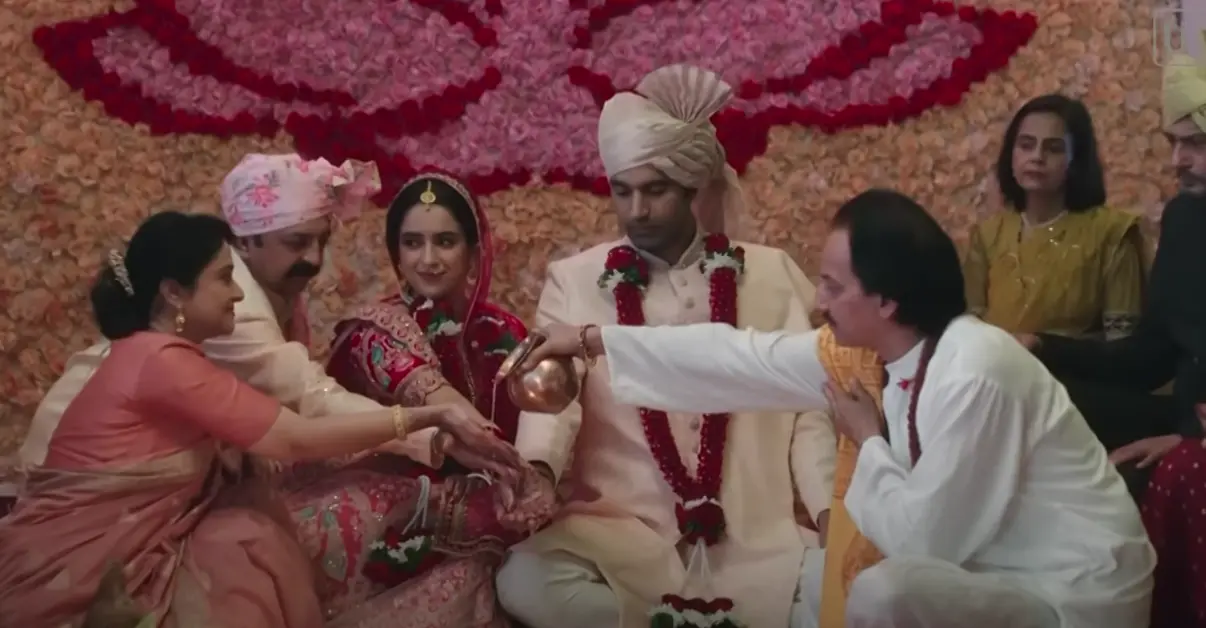
Review of Mrs.: Unveiling Patriarchy Through Quiet Rebellion
Rating: *** (3/5)
Streaming on: Zee5, February 7, 2025 onwards
The omnipresent force of patriarchy remains a contentious subject, with its depth often ignored or dismissed by many. The film Mrs., directed by Arati Kadav, is a Hindi adaptation of the acclaimed Malayalam film The Great Indian Kitchen (2021). It delivers a sharp, searing critique of traditional gender roles and the entrenched systems that perpetuate them. While Kadav’s adaptation borrows from its predecessor, it also carves out its own identity by reinterpreting the story for a Hindi-speaking audience. However, despite its strengths, it falls short of fully capturing the quiet devastation of the original.
The story revolves around Richa (played by Sanya Malhotra), who begins as a thriving, independent dancer with her own troupe. However, once married, her life takes a sharp, oppressive turn. The film portrays her journey from an energetic, hopeful artist to a subdued and suffocated homemaker, trapped within the confines of domesticity. The transition feels jarring, as small but insidious microaggressions begin to chip away at Richa’s autonomy, starting from her wedding night.
Mrs. effectively explores the systemic nature of patriarchy through these seemingly innocuous but deeply damaging moments. From casual remarks such as “Jo ye maa nahi sikha paayi, voh nayi maa sikha legi” to the condescending mockery of Richa’s career as a dancer, the film does not shy away from exposing the subtle yet pervasive power dynamics. The portrayal of Richa’s father-in-law’s dismissive attitude toward her relentless efforts further highlights the erasure of women’s labor. The most disturbing element is how Richa is reduced to little more than a vessel for her husband Diwakar’s pleasure, rendering intimacy meaningless. These moments unfold with quiet brutality, making Mrs. a film that speaks volumes without raising its voice.
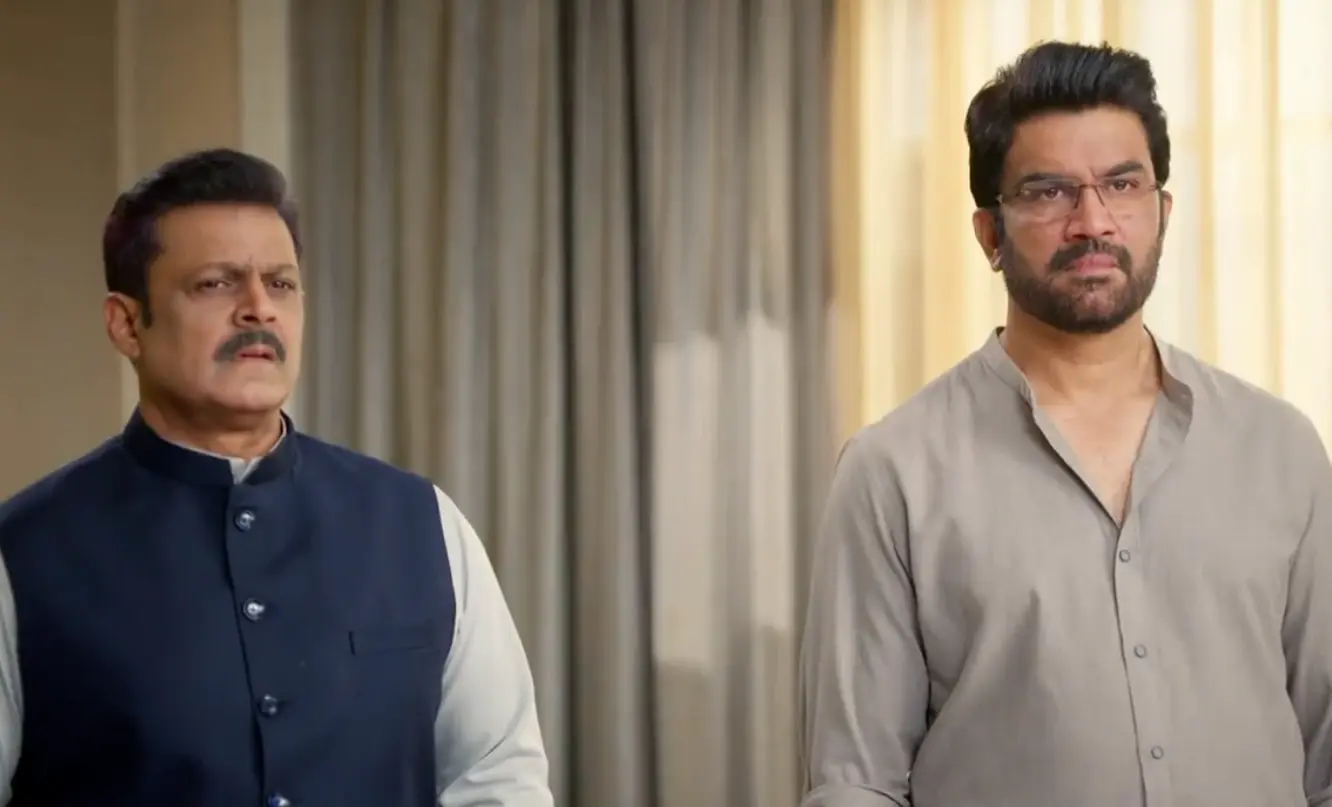
Sanya Malhotra’s performance is the heart of the film. She brings both vulnerability and strength to her character, transitioning from a hopeful newlywed to a woman unraveling under the weight of domestic subjugation. Malhotra’s emotional depth and haunting portrayal of Richa’s devastation and suffocated rage make her performance compelling. Alongside her, Nishant Dahiya as Diwakar and Kanwaljit Singh as Papaji deliver powerful performances. Their characters, while not overtly villainous, embody the insidious nature of patriarchy. The lack of malice in their actions makes them all the more authentic and unsettling, prompting viewers to reflect on how deeply social conditioning affects individuals and communities.
However, while Mrs. excels at depicting the subtle cruelty of patriarchy, it does falter in a few key areas. Unlike The Great Indian Kitchen, which relied on restraint and slow-burn tension, this adaptation becomes more overt in its portrayal of gender conflict. The second half of the film feels too binary, focusing more on the conflict between the genders and losing some of the subtleties that made the original film so powerful. Additionally, the absence of the mother-in-law after a climactic moment feels like a missed opportunity. Her presence was integral in the film’s earlier scenes, and her sudden disappearance leaves a narrative thread unaddressed.
Moreover, while the first half builds tension effectively, it often feels rushed. The gradual, oppressive dread that made The Great Indian Kitchen so impactful is somewhat lost in Mrs., which opts for a faster-paced narrative. Despite these shortcomings, Mrs. remains a commendable effort, capturing the exhaustion, claustrophobia, and silent rebellion that countless women experience in a patriarchal society. Though it may not possess the quiet devastation of its predecessor, it still resonates with viewers, offering a stark, uncomfortable reflection of the social system we live in.
In conclusion, Mrs. is a film that sheds light on the pervasive nature of patriarchy, holding up a mirror to society. It may not always get everything right, but it remains a necessary watch—one that forces audiences to confront uncomfortable truths. Whether viewers are willing to acknowledge it or not, Mrs. is a film that demands reflection.
← Loveyapa Review: A Digital Romance That Struggles with Modern Dilemmas







Leave a Reply