

Dhaakad Beera 3rd October 2025 Written Update: Forced Marriage Twist. The village wakes up on fire — not the literal kind at first, but the slow, radioactive burn of reputation, pride, and theatrical cruelty. Samrat kicks off the episode as every hero should: terse, protective, and allergic to nonsense. He tells Kishmish to listen to him because this place will chew her up if she isn’t careful. Kishmish, blessed with that honest-heart energy that makes villains hate you for being human, asks if she’s a burden. Samrat answers like a man who means it: she’s his life. Cue the soft-hued hero moment where you want to hand him a cape and a certificate for Best Emotional Support.
Juhi performs the kind of covert competence that soap operas love — whispers to someone offscreen that “the job is done.” Samrat hears it and hugs her like she’s delivered a miracle. He asks Kishmish to stay with Juhi, which is the show’s way of building a safe space that will, of course, be spectacularly unsafe in 20 minutes. The writers are reliably cruel that way, and we tune in willingly.
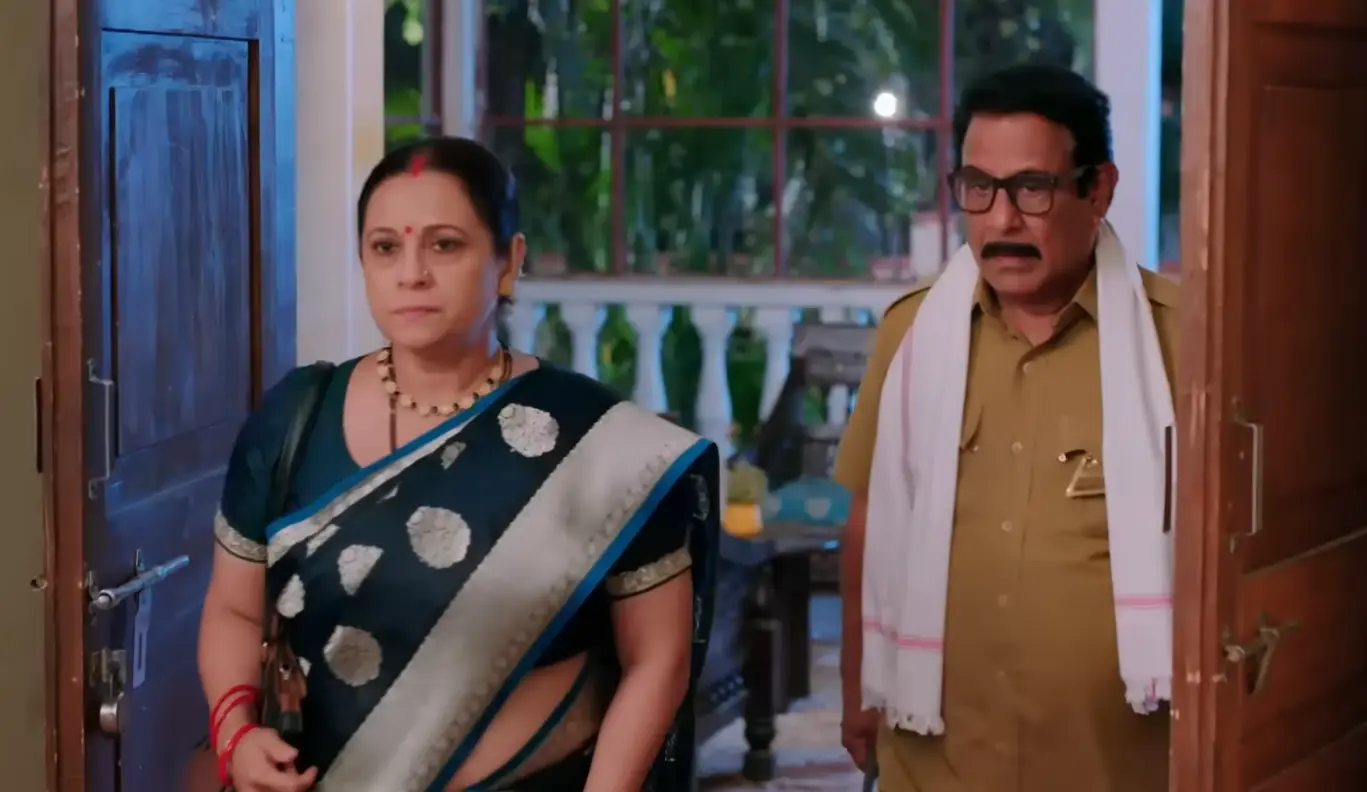
Enter Brijpal, who brings officialdom wrapped in moral bankruptcy. He tells Samrat bluntly that Samrat can’t protect Kishmish without his backing. Samrat insists he can. This feels less like a negotiation and more like two stubborn bulls bumping into the gate of destiny. Brijpal’s posture is that of a man who forgot kindness in his job description. He’s the village’s moral accountant — always balancing tradition and fear with a pen dripping hypocrisy.
Juhi and Samrat share a tiny, aching scene where feelings are given like forbidden sweets. Kishmish points out the obvious: some people are terrible at saying what’s in their hearts. Juhi tries anyway. She writes her confession like a prescription, slips it into Samrat’s hands, and leaves him with a pile of courage to read later. This quiet little moment is gorgeous because it’s understated. The show is smart enough to let tenderness breathe before the chaos rushes back in.
Chaos arrives in the form of a lost Beera and a poorly timed western outfit. A child says his Beera is missing; Kishmish, being made of optimism and goodwill, hurries to help. Bawridevi is watching. Manveer slips money to the kid’s parents, the kid returns, and the villagers suddenly discover a celebrity in their midst — because Kishmish has videos, and the internet never forgives rural imaginations. They decide she must go to the panchayat. Accusations — “illegitimate child” — fly like rotten tomatoes. Kishmish faints. It’s brutal and raw and terrible television in the best addictive sense.
At the panchayat the episode drops a grenade: Brijpal, who saved face by getting his reputation tended by Samrat, turns predator. He pours kerosene on Kishmish and proposes immolation as community justice. The script needed an uglier face for tradition weaponized; Brijpal obliges. The villagers go from curious to furious; the mob is written with frightening realism. Kishmish wakes, screams “Beera!” and the screen fractures into a thousand fingernail bites of panic.
Samrat explodes into action, roaring like a man whose heart is on fire for all the right reasons. He accuses Brijpal, demands to know where Kishmish is, and threatens retribution if anything happens. Brijpal’s reply is a diplomatic choke: he claims Kishmish isn’t there, then offers a bargain straight out of a gothic tragedy — marry Karishma and Kishmish will be spared. The price of protection is a coerced marriage. The village accepts this like a bureaucratic measure; the writers hand us a moral bill and expect Samrat to pay with his life and reputation. The episode ends on the cliff: Kishmish bound, villagers baying for blood, Samrat racing, and hope hanging by a thread.
Let’s be honest: Brijpal’s solution to everything is policy + pyro. If it were up to him, meetings would end with fire safety manuals and the entire village would be a seasonal bonfire. Bawridevi’s villainy is that old-school tape: thin veneer of respectability over a vacuum of empathy. Manveer is the kind of opportunist who’d sell winter to a penguin. Our heroes? Samrat’s gorgeous emotional budget gets drained every episode, and Juhi’s love notes disguised as prescriptions are the only reasonable healthcare plan in this village.
What works
- Emotional clarity. The show knows its characters’ beats. Samrat’s protective instinct never feels forced. Kishmish’s innocence reads true. Juhi’s shy bravery is a small, luminous star.
- Pacing with punches. Quiet domestic tenderness segues into mob fury without feeling random. The writers stack scenes carefully so that the escalation feels inevitable, not contrived.
- Social firepower. The panchayat set plays like a thesis on how power and superstition mix into a cocktail called oppression. It’s uncomfortable, and it should be.
- Performances. Actors sell every line — from a whispered prescription to a public call for immolation. The emotional stakes never fall into melodramatic puddles; they stay sharp.
What stumbles
- Predictable tropes. Forced marriage for ransom? It’s a classic ploy, and while effective, it’s on-the-nose. The show leans on tradition-as-antagonist a bit too often. A fresher twist would elevate the conflict beyond familiar soap mechanics.
- Villain monologues. Brijpal’s cruelty works, but sometimes the writing gives him lines that feel like set-piece speeches rather than organic choices. Less exposition, more sinister looks.
- Secondary characters. A few side players exist purely to move plot. Giving them small, surprising arcs would deepen the village’s texture and make the stakes feel even heavier.
Review verdict — thoughts about the show and story
Dhaakad Beera remains addictive because it balances tenderness with terror. The episode is a masterclass in emotional whiplash: it makes you smile at a tender hug and then drags you to the panchayat to watch community cruelty. That tension is the show’s engine. At its best, the series is a portrait of loyalty — Samrat’s unshowy devotion is the emotional core that saves what could otherwise be a parade of melodrama.
The writing sometimes trips over its own familiar tricks, but the performances lift it. Juhi’s subtle courage and Kishmish’s vulnerability make the audience care beyond plot mechanics. Brijpal is a satisfyingly detestable antagonist because he’s not cartoonish; he’s bureaucratically cruel, which makes him scarier.
If the show leans into moral complexity for longer — letting secondary characters surprise us, refusing gratuitous tropes, and making Brijpal’s motives feel less like a plot device and more like a slow-burn tragedy — it could graduate from dependable soap to something that lingers after the credits roll. For now, it delivers high-voltage drama, occasional emotional gold, and a promise: the next episode will either give us catharsis or break our hearts further. I’m betting on both.
Final thought: grab a tissue, not just for the tears but for the inevitable kerosene-scented metaphor the writers love to light. This episode nails the feel of a community that’s both family and executioner. Samrat may have to marry Karishma, but the audience is already married to the drama — and that, my friend, is the most dangerously addictive bond of all.
← Dhaakad Beera 2nd October 2025 Written Update: Samrat and Kishmish’s Reunion







Leave a Reply