
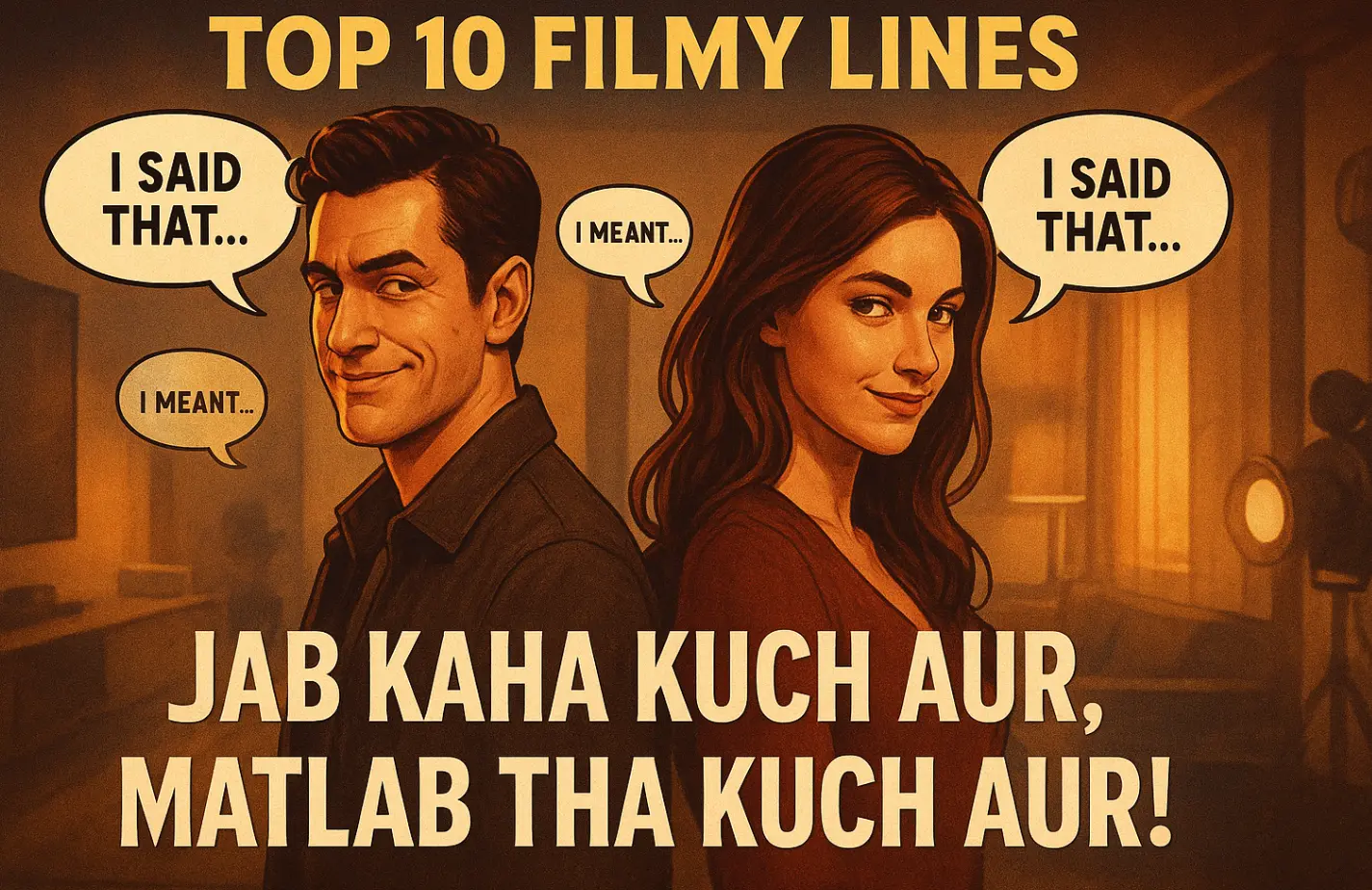
Top 10 Filmy Lines That Say One Thing But Mean Another: When TV Drama Meets Real Life Logic. Every TV lover knows the drill — what the hero says and what he means are often two different things. And the heroine? Well, her silence sometimes says louder things than a monologue.
Our shows are filled with poetic dialogues, but behind those lines lies an entire hidden dictionary of emotions. The irony is that these dramatic confessions often mirror real life — we too, in our quiet moments, speak one thing and mean another. Maybe that’s why TV dialogues hit us harder; they expose the contradictions we all live with.
Let’s decode ten such lines that have traveled from television scripts straight into our everyday emotions.
1. “Main theek hoon.”
What it sounds like: Strength. Stability. Calm.
What it actually means: “I’m breaking, but I don’t have the energy to explain.”
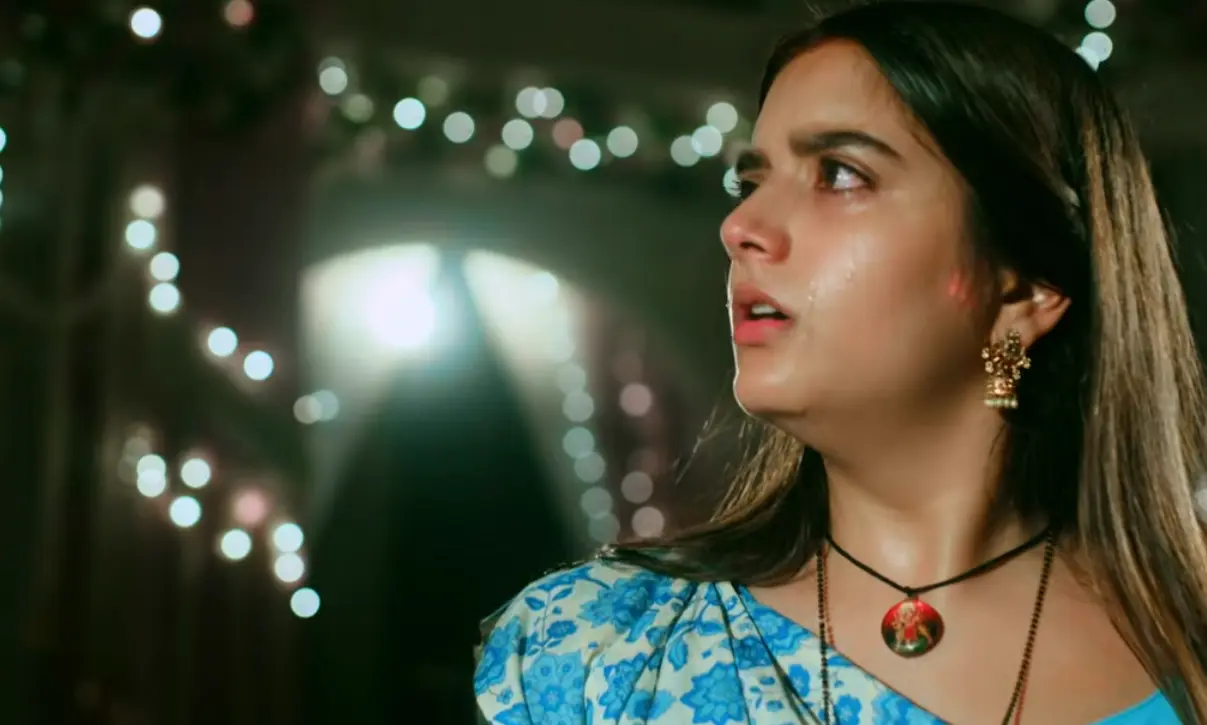
Every serial has this one moment — the hero stands in the rain, soaked in heartbreak, saying he’s fine. In real life too, we all wear this mask. The words are simple, but the silence after them says everything.
2. “Tum badal gaye ho.”
What it sounds like: Disappointment.
What it actually means: “You stopped revolving around me.”
Whether it’s a lover in a soap or a friend in real life, this line comes when someone dares to grow. It’s less about betrayal and more about the discomfort of change. Because, sach bolo, we like people who stay predictable — until we realize growth was never meant to be comfortable.
3. “Mujhe farak nahi padta.”
What it sounds like: Indifference.
What it actually means: “I’ve been stalking your Insta stories for the past week.”
This line should win an award for acting excellence. Every hero or heroine has said it with straight eyes and trembling hands. It’s the anthem of denial — the war between pride and pain.
4. “Jo likha hai, wahi hoga.”
What it sounds like: Faith in destiny.
What it actually means: “I’ve lost control and I need to sound spiritual.”
In shows, this line appears right after chaos. In life, we say it when our plans collapse and we have no Plan B. Destiny becomes the word we hide our helplessness behind.
5. “Main tumhare bina jee nahi sakta.”
What it sounds like: Eternal love.
What it actually means: “I’ll text you after a month once the ego cools down.”
The most overused and least true line of all time. TV heroes deliver it under moonlight; real people type it under network issues. Both mean it in the moment — but love isn’t a line, it’s a lifetime of showing up after the drama fades.
6. “Kuch bhi kar lo, mujhe farak nahi padta.”
What it sounds like: Dismissal.
What it actually means: “Please notice that I’m pretending not to care.”
The line that defines every argument. The heroine says it while walking away, the hero stares dramatically, music swells. And in that scene lies the biggest human flaw — we say we don’t care just to see if the other person still does.
7. “Tum samjhoge nahi.”
What it sounds like: Resignation.
What it actually means: “I’m scared of being vulnerable.”
This line always sounds noble but hides cowardice. On screen or off screen, people use it when they’re too afraid to open up. It’s easier to sound mysterious than to admit pain.
8. “Main sab theek kar dunga.”
What it sounds like: Confidence.
What it actually means: “I have no idea what I’m doing, but I’ll figure it out somehow.”
This line is every hero’s favorite. And in real life, it’s every human’s silent promise to themselves. Because sometimes courage isn’t having answers — it’s pretending you do until they arrive.
9. “Tum meri duniya ho.”
What it sounds like: Love in its purest form.
What it actually means: “I don’t know who I am without you.”
Beautiful, dangerous, and poetic — this line is both devotion and dependency wrapped together. On TV, it melts hearts. In life, it reminds us to find our own world before we make someone else our everything.
10. “Mujhe bas thoda waqt chahiye.”
What it sounds like: Needing space.
What it actually means: “I want to leave, but I’m too polite to say it now.”
Time is the politest goodbye ever written. In serials, it gives hope; in real life, it gives distance. And sometimes, that’s what we all need — a little pause before a new beginning.
The Philosophy Behind the Words
Every dialogue carries a heartbeat. What we say and what we mean are separated by the gap of fear — fear of judgment, fear of loss, fear of truth. We grow up watching shows where characters pour their emotions into dramatic lines, yet in our own lives, we turn minimal, saying the smallest phrases to cover the deepest feelings.
Maybe that’s why TV stories work. They speak aloud the emotions we hide. They dramatize what we whisper. The lines may sound exaggerated, but their meanings are painfully real.
Our communication has become layered — not just in scripts but in daily life. A “Take care” might mean “I miss you.” A “Good luck” might mean “I still believe in you.” We’ve all become actors, just on smaller stages.
When a character on screen says, “Main theek hoon,” and we feel our throat tighten, it’s not about fiction. It’s about recognition. We see our own reflections behind their dialogues.
The magic of storytelling lies in this translation of emotion — from written line to lived feeling. It reminds us that words aren’t weak; they’re just misunderstood. And the bravest act sometimes is to say what you really mean, without hiding it behind poetry.
Television, in its melodramatic way, teaches us honesty by exaggeration. It shows us that the strongest characters aren’t the ones who deliver grand speeches — they’re the ones who finally stop pretending.
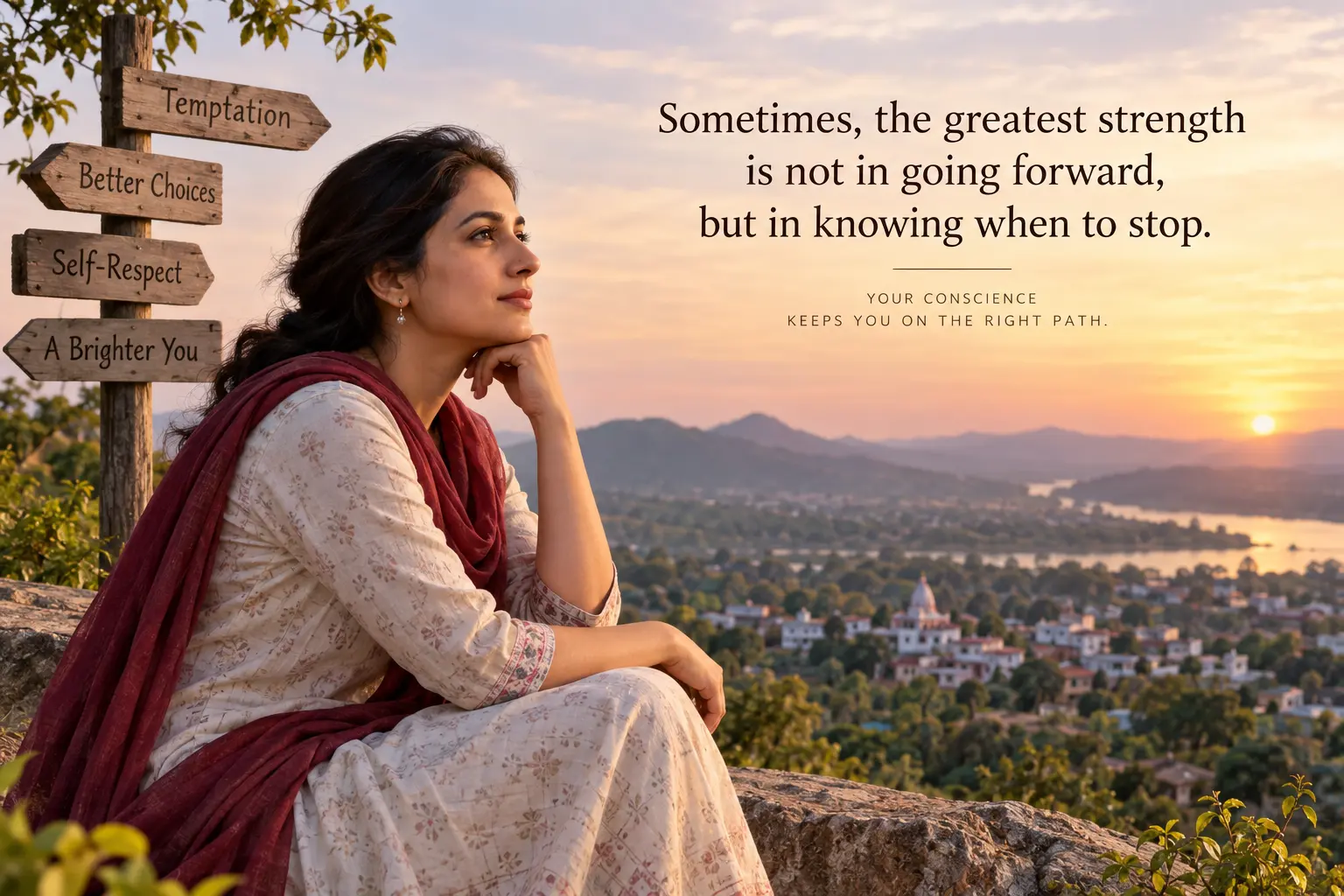
Maybe that’s the lesson we take from these filmy lines — that communication is not about sounding perfect, it’s about being real. Whether in scripts or in life, the story changes when the truth finally finds its voice.
← Jaane Anjaane Hum Mile Fans Go Gaga Over Raghav-Reet’s Dance, Slam Makers for Love Triangle Chaos!




Leave a Reply