
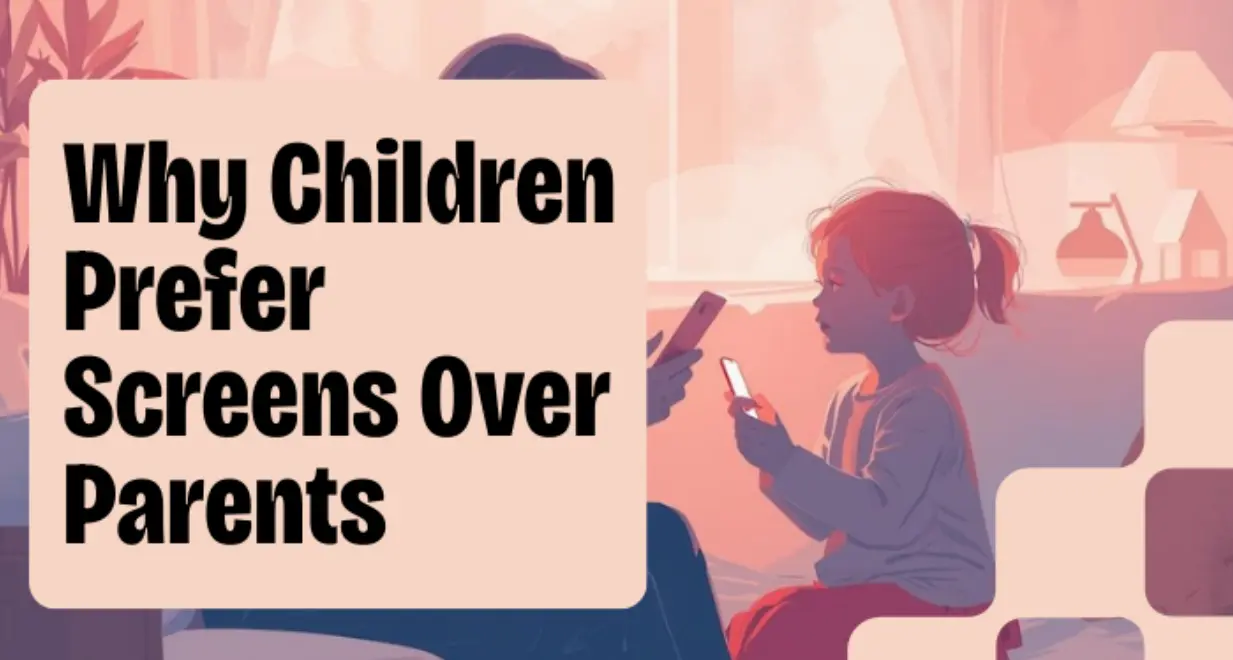
Why Children Prefer Screens Over Parents: A Soft Story Every Home Should Read. When Words Went Missing: The Day Rhea Realized What Her Daughter Needed Most.
Rhea never imagined that communication with her little girl would become the hardest thing in the world. Ira was only nine — soft-spoken, curious, and bright-eyed — the kind of child who once narrated every tiny detail of her day, from a crooked drawing she made in class to the exact number of ants she counted near the school gate. But somewhere along the years, something shifted quietly, like dust settling on a window nobody cleans anymore. The stories grew shorter. The excitement dimmed. And slowly, the words stopped coming altogether.
Rhea didn’t notice it at first. Life was loud, fast, and unkind on most days. There were dishes to wash, laundry to fold, deadlines to meet, meals to cook, and messages buzzing endlessly on her phone. By the time she got a moment to breathe, she would scroll through random videos until her mind felt numb enough to rest. Ira, on the other hand, spent her free time hunched over cartoons or playing games, the blue glow of the screen lighting up her little face. They lived under the same roof, in the same room, with the same routine — yet miles apart in silence.
The silence didn’t arrive dramatically. It arrived because of the little things. Because Rhea scolded Ira too quickly when she made mistakes. Because she dismissed small troubles as “unimportant.” Because she didn’t ask enough questions. Because she forgot to sit beside her and simply listen. And because phones were always there — tempting, absorbing, distracting — pulling both mother and child into their own private bubbles.
One evening, Rhea noticed something that felt like a pinch to her heart. Ira was standing near the doorway, holding her notebook tightly against her chest. Her lips parted as if wanting to say something, then closed again. She turned around quietly and walked away. That small hesitation — that tiny moment — felt louder than any argument. It was the kind of moment that tells a parent, without words, that something has already gone wrong.
Rhea followed her gently into the room. She found Ira drawing circles on the last page of her notebook, slow, shaky circles that meant her mind was full of thoughts she couldn’t express. Rhea sat beside her, but Ira didn’t look up. That silence made Rhea feel like a stranger in her own child’s life. She wondered when this wall had been built and how she had missed every brick.
She thought about her own childhood, how she ran to her mother with every fear, every secret, every question. Back then, her mother’s lap had been the safest place in the world. Why was Ira not coming to her? Why had the trust shifted to friends who barely understood life? Why had her own little girl started carrying burdens too heavy for a child’s heart?
As she sat there, memories of her own behavior came rushing back — the hurried scoldings, the irritation, the distracted nods, the times she spoke without listening, the moments she chose her screen over a conversation. She suddenly realized that communication wasn’t just about talking. It was about being present. It was about patience. It was about offering a safe space before expecting a child to fill it.
“Ira,” she whispered softly. Her voice was gentle, trembling with a sincerity that came from someplace deep.
Ira looked up, surprised. Rhea wasn’t scolding. She wasn’t in a hurry. She wasn’t distracted. For the first time in a long while, Rhea’s eyes were steady, warm, and waiting.
Rhea took a slow breath and said, “I’m sorry if I haven’t been listening enough. I think I forgot how important your words are. But I’m here now. You can tell me anything. And this time, I’ll hear you.”
Those simple words seemed to unlock something fragile. Ira’s eyes softened, and she slowly opened her notebook. Inside was a small drawing — a picture of a classroom where a girl was standing alone while others whispered in a group. Above the picture, in crooked handwriting, she had written, “I feel left out.”
Rhea felt a sting in her chest. Her little girl had been carrying this silently. She hugged Ira gently, letting the child rest her head on her shoulder. In that moment, she understood the depth of what communication truly meant. It wasn’t about perfect words. It wasn’t about long speeches. It was about presence, honesty, and warmth. Children don’t need flawless parents; they need available ones.
They talked for a long time that evening. Not about big issues or dramatic events, but about small things — the kind of small things that build trust, stitch hearts together, and make a home feel like home again. Ira spoke slowly at first, as if testing whether it was safe. When she saw that her mother wasn’t rushing, correcting, or scolding, she opened up like she used to — with little stories, feelings, and fears.
And Rhea realized something profound: communication is not a luxury in a parent-child relationship — it is the lifeline. Without it, love gets lost in assumptions. Without it, problems grow quietly. Without it, children drift into places where parents cannot follow.
That night, before sleeping, Ira whispered, “Mama, can we talk like this every day?”
Rhea hugged her tighter, feeling the weight of her own mistakes dissolve into hope. “Yes,” she promised. “Every day.”
Communication didn’t fix everything instantly. But it built a bridge between them, a bridge strong enough for little footsteps and big emotions. It reminded Rhea that shouting creates distance and silence creates emptiness — but gentle words create understanding. And understanding is where love truly lives.
← Why Your Heart Feels Heavy Sometimes — And Why It Doesn’t Mean You’re Falling Apart












Leave a Reply