
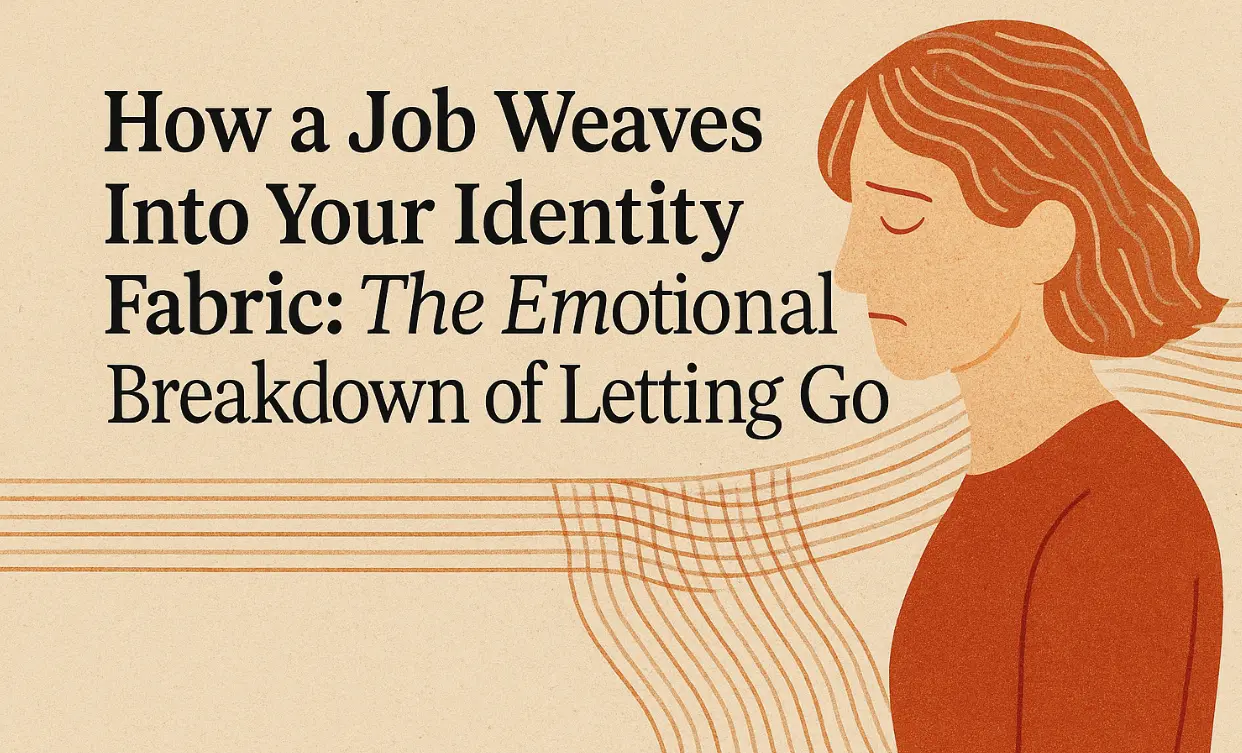
How a Job Weaves Into Your Identity Fabric: The Emotional Breakdown of Letting Go. Why Farewells Hurt So Much When We Leave a Long-Term Job: The Psychology of a Breaking Chapter.
There are endings we prepare for, and then there are endings that walk in unannounced, sit beside our life, and gently whisper, “It’s time.” Those are the ones that sting the most — the ones tied to places we’ve given our years, our effort, our habits, our identity, and a big chunk of our everyday routine. When a long-term job ends, especially after a decade or more, the heart doesn’t react like it’s losing work. It reacts like it’s losing a home.
Goodbyes in the professional world are never just professional. They are layered. You don’t only say farewell to a website, a company, or a platform — you say farewell to the version of you who grew up there. The younger you who started with nervous excitement. The tired you who stayed up late to meet deadlines. The proud you who celebrated every milestone. The resilient you who didn’t quit even when things were rough. All those versions of you quietly stand behind that farewell, and losing the space where they existed feels like losing pieces of yourself.
Psychologists say that long-term work becomes part of our “identity fabric.” It’s not just what we do — it’s who we are every morning when we wake up, every evening when we wind down. When that fabric tears suddenly, we feel a mix of sadness, anxiety, confusion and, strangely, a sense of homelessness. Work gives structure to our days. A long-term job gives structure to our life story. So when it closes, it feels like a chapter is ripped out without warning.
There’s also a strange emptiness that follows. Almost like standing in a familiar room that’s suddenly been cleared of all furniture. You can still see the outlines of what was once there, but you can’t sit anywhere. You can’t settle. You can’t breathe the same way. The silence feels too loud. That’s what happens inside the mind. You know you’re capable. You know you’re strong. But your emotional system is still trying to catch up with the change.
And then comes grief — yes, real grief. We often forget that grief isn’t only reserved for people. We grieve routines. We grieve workspaces. We grieve roles we outgrew. We grieve the feeling of belonging. When you’ve worked somewhere for 10 or 12 years, the loss hits like the end of a long friendship. There are memories attached to tiny things — the page layout you worked on, the deadlines that shaped your days, the voices you got used to, the small rituals that became part of you. Letting them go hurts because they weren’t just habits; they were your emotional anchors.
This is exactly why such farewells feel like heartbreak. Not dramatic heartbreak — but a quiet, sinking ache. You can still function, but something feels heavy in the chest. You clean your desk, close your last login, press publish one final time, and suddenly a decade collapses into a single moment. No matter how strong you are, it shakes you.
But here’s the witty twist life always adds: endings like these feel personal and painful, yet they open doors that never existed before. Even when the mind is sulking, life is secretly rearranging things for your next chapter. And while the farewell feels like a door slamming shut, what’s actually happening is a slow unlocking of another door you haven’t walked through yet.
There’s also something beautifully human about how we process this pain. After the shock, the sadness slowly softens into nostalgia. Nostalgia softens into wisdom. Wisdom slowly transforms into new creativity. Humans are built to rebuild themselves, sometimes even better than before. Your mind may mourn the platform, the routine, the long journey — but another part of you is already getting ready to grow again.
And you know what makes these endings less scary? The fact that your skills, your journey, your legacy, your voice — they stay with you. A website shutting down cannot shut down what you built in yourself. A platform ending cannot end your purpose. The years don’t disappear; they become your strength. You carry the entire journey with you, quietly, like a story only you can hold.
So if your heart feels heavy, it’s because it’s honoring the place that shaped you. If you feel emotional, it’s because you cared. If your mind feels unsettled, it’s because the ground is shifting to make space for something else. And if the farewell hurts, it simply means the chapter mattered.
In the end, life is unfairly poetic — the places we outgrow still leave fingerprints on us, and sometimes the hardest goodbyes become the quiet beginnings of our strongest new chapters.
← Weekend Breaks: The Brain’s Secret Spa Day You Didn’t Know You Needed










Leave a Reply