
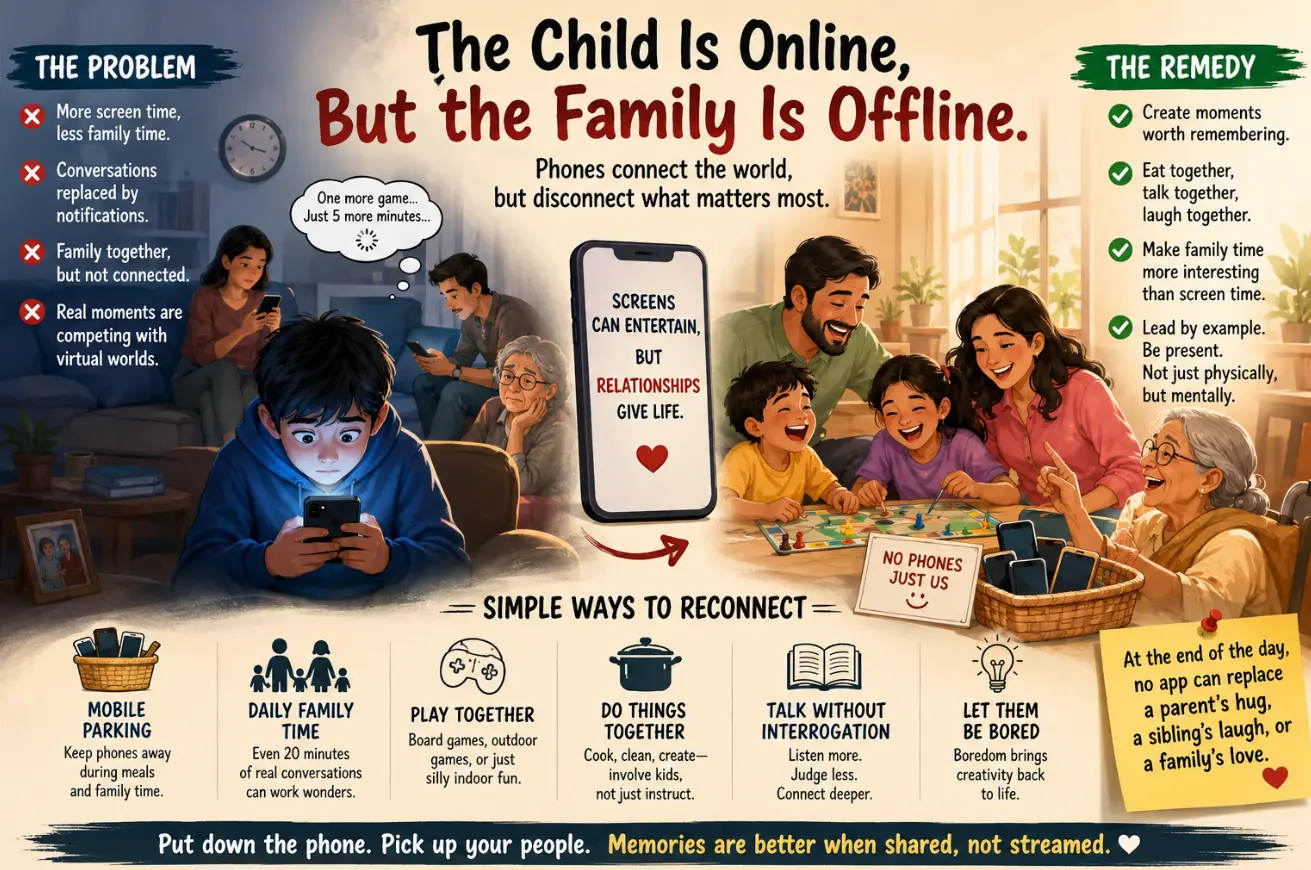
The Child Is Online, But the Family Is Offline.
There was a time when homes echoed with random conversations, silly fights over the TV remote, evening walks, and mothers shouting from the kitchen because dinner was getting cold. Today, many homes have become strangely silent. Everyone is present physically, but mentally, they are somewhere inside a glowing screen.
A child wakes up and checks the phone before even brushing. Breakfast happens with YouTube shorts. Homework takes “just five minutes” because gaming notifications keep arriving like urgent national alerts. Parents wait to talk, grandparents sit hoping for attention, but the child is busy protecting a virtual kingdom or maintaining Snapchat streaks that somehow feel more important than real relationships.
The irony is painful and funny at the same time. Kids today know how to skip ads in two seconds but cannot sit with family for ten minutes without saying, “I’m bored.” Some children have memorized gaming maps better than their own family traditions. Festivals are becoming selfie sessions. Dining tables look like mobile charging stations. Even emotional moments now compete with Instagram reels.
This is no longer a small issue happening in one city or one country. It has quietly become a global family crisis. Parents everywhere are struggling with the same question: how do we bring children back from the digital world without becoming villains in their eyes?
The answer may not lie in banning phones completely. Let’s be honest — even adults are addicted. Parents themselves sometimes scroll endlessly while telling children to avoid screens. A child notices actions more than lectures. If the entire house looks like a WiFi-powered zombie camp, kids will naturally follow the same lifestyle.
The first remedy is surprisingly simple: make family time more interesting than screen time. A child won’t leave an exciting world for a boring one. Instead of only saying “Put the phone away,” families can create moments worth remembering. Play dumb board games. Cook together. Watch funny old videos from family weddings. Go for walks without phones. Let grandparents tell embarrassing stories about the parents. Children secretly enjoy these moments more than adults realize.
Another trick is introducing “mobile parking.” Yes, literally. Keep a basket near the dining table where everyone — including parents — drops their phones during meals. No VIP treatment for adults. If the father secretly checks cricket scores under the table while the child gets scolded for using the phone, the entire mission collapses immediately.
Families should also stop treating emotional connection like homework. Many parents only speak to children about marks, discipline, or responsibilities. Naturally, the child escapes into the phone where nobody judges them every minute. Sometimes children just need relaxed conversations without interrogation mode activated.
There’s also a need to teach children boredom again. Modern kids are terrified of silence because entertainment arrives every second. But boredom is where creativity begins. The best childhood memories were often made from doing absolutely nothing special — talking nonsense with cousins, inventing silly games, or simply sitting with family during power cuts.
Technology itself is not evil. Phones connect people, educate children, and entertain tired minds. The problem starts when screens replace relationships instead of supporting them. A child should not grow up remembering parents only through forwarded WhatsApp messages sent from the next room.
At the end of the day, children don’t just need WiFi signals. They need eye contact, laughter, attention, warmth, and memories. One day, the latest app will disappear, games will change, and trends will fade. Family moments are the only notifications that truly stay forever.












Leave a Reply