
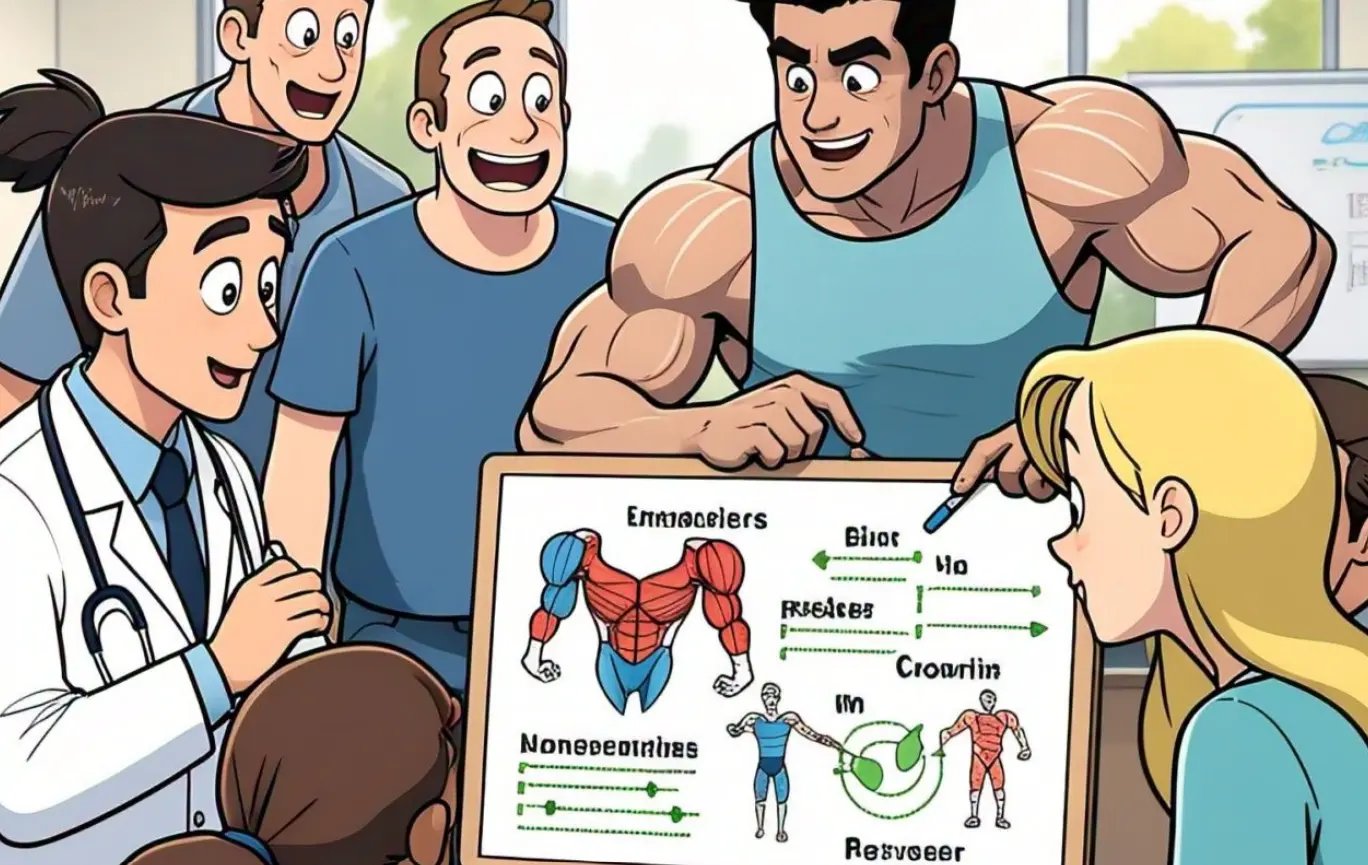
What Makes Muscles Grow? How To Treat Muscle Damage and Repair. Muscles form a vital part of the human body, comprising over 600 individual muscles that contribute to between one-third and half of our body weight. Alongside connective tissue, muscles provide structural integrity, mobility, and the strength necessary to perform daily tasks. Maintaining and strengthening muscles requires consistent attention because their condition depends heavily on how they are used and nurtured.
How Muscles Work
When the brain identifies a need for movement, such as pulling open a door, it sends signals to motor neurons in the muscles involved. These neurons fire, causing a sequence of muscle contractions and relaxations. The force generated by the muscles moves bones and accomplishes the task.
If the task is challenging—like pulling a heavy iron door—the brain recruits additional muscles from the core, back, and legs to generate the necessary tension. This coordinated effort demonstrates how the nervous system maximizes available resources to meet physical demands.
Muscle Damage and Repair
When muscles are exposed to stress, they undergo microscopic damage, which initially sounds harmful but is actually beneficial. This damage triggers the release of inflammatory molecules called cytokines, which activate the immune system. The repair process not only heals the damaged fibers but also strengthens them to adapt to future challenges. The more extensive the damage, the greater the body’s repair response, leading to muscle growth.
Building New Muscle (Hypertrophy)
Everyday activities are generally insufficient to induce muscle growth because the body has already adapted to these demands. To stimulate hypertrophy, muscles need to be exposed to progressively higher workloads.
- Eccentric Contractions: Lengthening the muscle under tension, such as during the lowering phase of a bicep curl, is particularly effective for growth.
- Atrophy: Without continuous resistance and tension, muscles shrink, becoming weaker over time.
Role of Nutrition, Hormones, and Rest
Muscles need more than physical stress to grow. Proper nutrition, hormonal support, and rest are essential for the repair and rebuilding process.
- Protein: Provides the amino acids required for tissue repair.
- Hormones: Testosterone and insulin-like growth factors aid tissue repair and growth.
- Rest: Muscle repair primarily occurs during rest, especially while sleeping.
Influence of Gender, Age, and Genetics
- Gender and Age: Men, especially young ones with higher testosterone levels, have a natural advantage in muscle growth.
- Genetics: Some individuals have a more robust immune response to muscle damage, enhancing their muscle-building potential.
Insights
- The Importance of Stress: Muscle growth is essentially the body’s response to controlled stress. Without stress, growth is impossible.
- Progressive Overload Principle: To build muscle, you must consistently push beyond your comfort zone by increasing resistance and tension levels over time.
- The Power of Eccentric Training: Focusing on the lengthening phase of a movement is an underrated but highly effective strategy for muscle development.
- Isn’t it ironic that the pain we curse after a gym session is actually a trophy our body gives us for progress?
- We literally tear ourselves apart in the gym only to celebrate the soreness with protein shakes and selfies.
- Everyone talks about the magic of sleep for recovery, but try convincing your to-do list that eight hours of sleep is “productive.”
- Funny how muscles “grow under stress”—kind of like humans dealing with Monday mornings.
Muscle growth isn’t just about lifting weights—it’s a journey that requires stress, challenge, nourishment, and recovery. Just as life throws challenges that build resilience, meaningful muscle development only happens when we push ourselves beyond our limits and give our body the care it deserves.
← Track Your Fitness Goals with This Effective Fitness Template!












Leave a Reply