
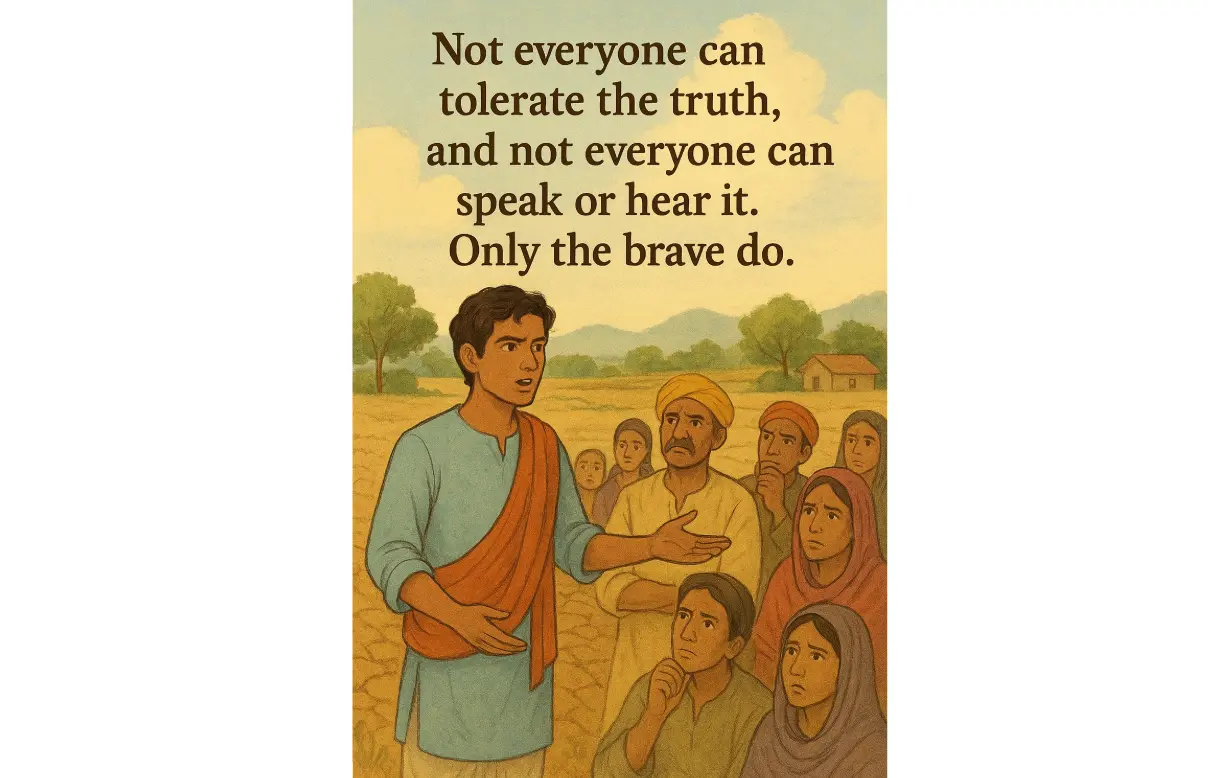
The Brave Truth-Teller and the Weight of Words. Once upon a time, in a small village nestled between green hills and flowing rivers, there lived a young man named Arjun. Arjun was known for his honesty and courage. He never hesitated to speak the truth, even when it was uncomfortable or risky.
One day, the village faced a terrible drought. The crops began to wither, the river ran low, and fear spread like wildfire. The village head, a proud and stubborn man named Ramesh, insisted everything was fine and told the people not to worry. He claimed that the rains would come soon, even though deep inside, he knew the situation was worsening.
Arjun, who had visited the riverbanks and seen the dried-up wells, decided to speak up. He gathered the villagers in the square and told them the harsh truth—there was no rain coming, and unless they conserved water and planned carefully, their crops and future would perish.
A hush fell over the crowd. Some villagers were grateful for Arjun’s honesty, but many others grew angry. They accused him of spreading fear and disrespecting the village head. Ramesh, furious and humiliated, labeled Arjun a troublemaker, warning him to keep silent.
Days passed, and as Arjun predicted, the drought worsened. The crops failed, and the villagers began to suffer. Slowly, regret seeped into their hearts. They realized Arjun had only spoken the truth out of care, not malice. It was then they understood a simple but powerful lesson:
“Not everyone can tolerate the truth, and not everyone can speak or hear it. Only the brave do.”
Arjun never sought glory or recognition. He continued to help the village, suggesting practical ways to conserve water and grow drought-resistant crops. The villagers gradually came to respect him—not just for his honesty but for his courage to speak when others were too afraid.
Years later, the village flourished again, and Arjun’s name became a quiet legend—a reminder that truth, though difficult, is a seed of hope that only the brave dare to plant.
Moral of the Story
Truth is not always easy to speak or hear. It takes strength, courage, and a pure heart to face the consequences that come with it. But those who dare to speak the truth, and those who have the wisdom to listen, shape a better, stronger world.
The story of Arjun teaches us that speaking the truth is not a task for the faint-hearted. It requires immense courage, a sense of responsibility, and a strong moral compass. The harsh reality is that not everyone can tolerate hearing the truth, especially when it exposes uncomfortable facts or challenges the status quo. Many would rather live in blissful ignorance or follow convenient lies than face difficult realities.
As the famous quote by Mahatma Gandhi goes,
“Even if you are a minority of one, the truth is the truth.”
Arjun stood firm in his belief, knowing that truth is not about pleasing others but about doing what is right, even if it leads to temporary rejection.
Another powerful quote that fits this story is by Mark Twain:
“If you tell the truth, you don’t have to remember anything.”
Over time, the villagers came to realize that Arjun’s honesty was an act of deep compassion, not defiance. His bravery helped them confront the drought realistically and take action before it was too late. The real strength lies not in avoiding the truth, but in facing it head-on.
In the end, the story reminds us that truth is a seed that grows slowly but bears the sweetest fruits. Only the brave dare to sow it.
← Racing Ahead When Brakes Fail: A Lesson in Life’s Sudden Tests












Leave a Reply