
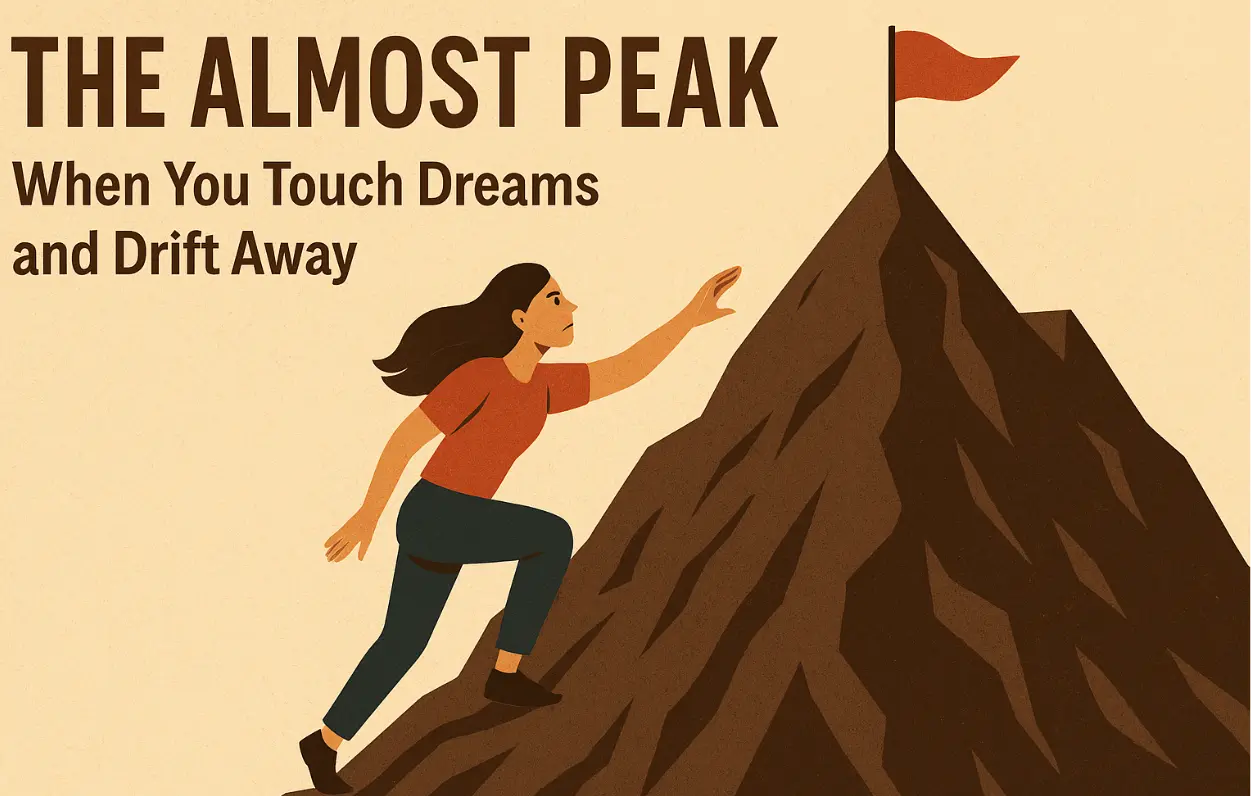
The Almost Peak: When You Touch Dreams and Drift Away. Since childhood, Alina pictured herself standing at the peak of her ambitions, feeling the exhilaration of achievement coursing through her. Her goal wasn’t easy—it was a prestigious art scholarship in a faraway city, one that would give her the freedom to study under masters she had admired for years. Every brushstroke, every late-night painting, every sketch she shared online was a step closer to it.
Keith, her childhood friend and quiet supporter, often watched Alina with admiration. He had a different kind of dream—building a community library for underprivileged kids—but he was drawn to Alina’s fire. He believed in her even when she doubted herself.
The day of the scholarship interview came. Alina had worked tirelessly, perfecting her portfolio, rehearsing her presentation, and pushing her creativity further than ever before. Keith accompanied her to the city, cheering her along, reminding her that she had already achieved more than many could even imagine.
As she entered the interview room, her hands shook, but her heart pulsed with excitement. She felt she was closer than ever, on the very edge of her dream. The panel scrutinized every piece she had brought. She spoke eloquently about her vision, poured her soul into every word, and when she left the room, she was confident. This was it—she had reached the point closest to her goal.
Days later, the rejection email arrived. Alina’s hands trembled, and her heart sank. All her effort, her sleepless nights, her sacrifices—it seemed to vanish in a single moment. She felt like she had been hurled back to point zero, as if all her effort had gone to waste. For days, she drifted aimlessly, staring at her canvases, unable to paint. The dream that had felt tangible was now a painful memory.
Keith noticed her despair and gently said, “Alina, do you remember the first painting you ever sold at the school fair? You thought it was nothing, yet it brought joy to someone. That’s still here. Your art still matters. Your journey isn’t over.”
His words weren’t magic, but slowly, they began to sink in. Alina started painting again—not with the pressure of winning a scholarship, but for the joy of creation, for the love of her craft. She explored new techniques, experimented with colors she had never used, and allowed herself to fail in small ways without fear. Each painting became a lesson, each brushstroke a small victory.
Months later, another opportunity appeared—not the exact scholarship she had initially wanted, but a chance to showcase her work in a local art festival. Her portfolio, now richer, bolder, and more authentic, caught the attention of a visiting curator. This led to a mentorship, one she hadn’t imagined before. While it wasn’t the scholarship she had lost, it became something equally transformative. Alina realized that the zigzag path—the moments of almost and drifting away—wasn’t failure; it was training ground for resilience, creativity, and patience.
Keith, watching her growth, smiled. “Sometimes the edge of almost is exactly where you need to be to leap higher than you imagined.”
Alina finally understood that goals are not static lines to be crossed; they are landscapes to explore. Even if the peak seems unreachable at times, the climb itself carries rewards, shaping who we are in ways that certainty never could.

Moral:
Life’s ambitions often resemble a jagged, zigzag line rather than a straight path. We move closer to our goals, only to drift back, and sometimes we reach the very edge, tantalizingly near, only to lose our grip. The pain of seeing all effort seemingly wasted is real; it can make us question the value of striving, leaving a temptation to abandon the pursuit altogether. But here lies the deeper truth: the journey shapes us more than the destination. Each attempt, each failure, and each near-success refines our skills, expands our perspective, and strengthens our resolve.
Giving our best, even knowing the goal may not be reachable again, transforms our character, teaches patience, and cultivates humility. Choosing to continue is not mere stubbornness—it is faith in the unseen impact of our efforts. Sometimes, the original goal may remain out of reach, but new doors, opportunities, and insights emerge, often surpassing what we initially imagined. To drift back to zero is not defeat; it is a chance to recalibrate, learn, and aim with wiser energy. In essence, resilience, persistence, and hope are the truest rewards of near-misses, and the zigzag of striving becomes the art of living fully.
← Schadenfreude: Why Other People’s Drama Feels Like Dessert












Leave a Reply