
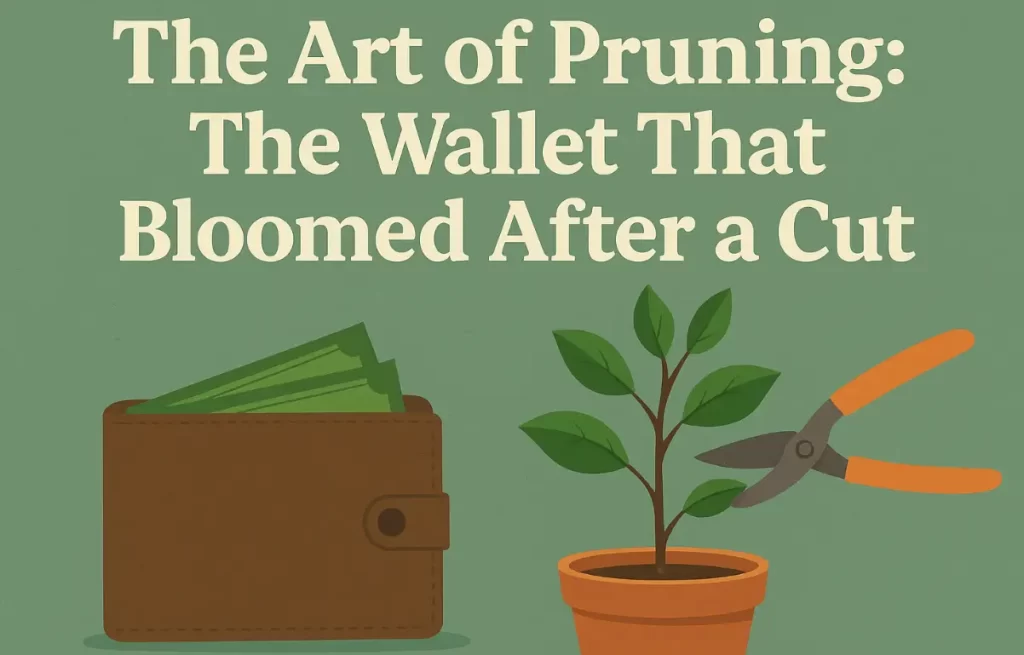
The Art of Pruning: The Wallet That Bloomed After a Cut. The clock ticked lazily that Saturday afternoon when Ira walked into the kitchen, sleeves rolled up, eyebrows slightly furrowed — that expression she wore only when she was about to say something serious. Her brother, Aman, was sorting through a few old bills and donation receipts spread on the dining table like a patchwork of responsibilities.
“I just got a message from Zoya,” he said. “Her father’s in the hospital again. They need help with the bills.”
Ira stopped mid-step, looking both concerned and hesitant. “Again? But Aman, didn’t you just help them last month?”
“Yes,” he said, calmly. “And I will help again.”
Ira sighed. “Aman, listen… we’re already stretching our expenses. Rent went up, grocery prices are crazy, and festive is next month. Maybe you should wait until next salary.”
Her voice wasn’t cold — it was cautious, filled with the kind of love that wears the armor of logic.
Aman looked at her, thoughtful. “So you’re saying I shouldn’t help when I know I can?”
“I’m saying think before you give,” she replied. “It’s not about being selfish, Aman. It’s about being smart.”
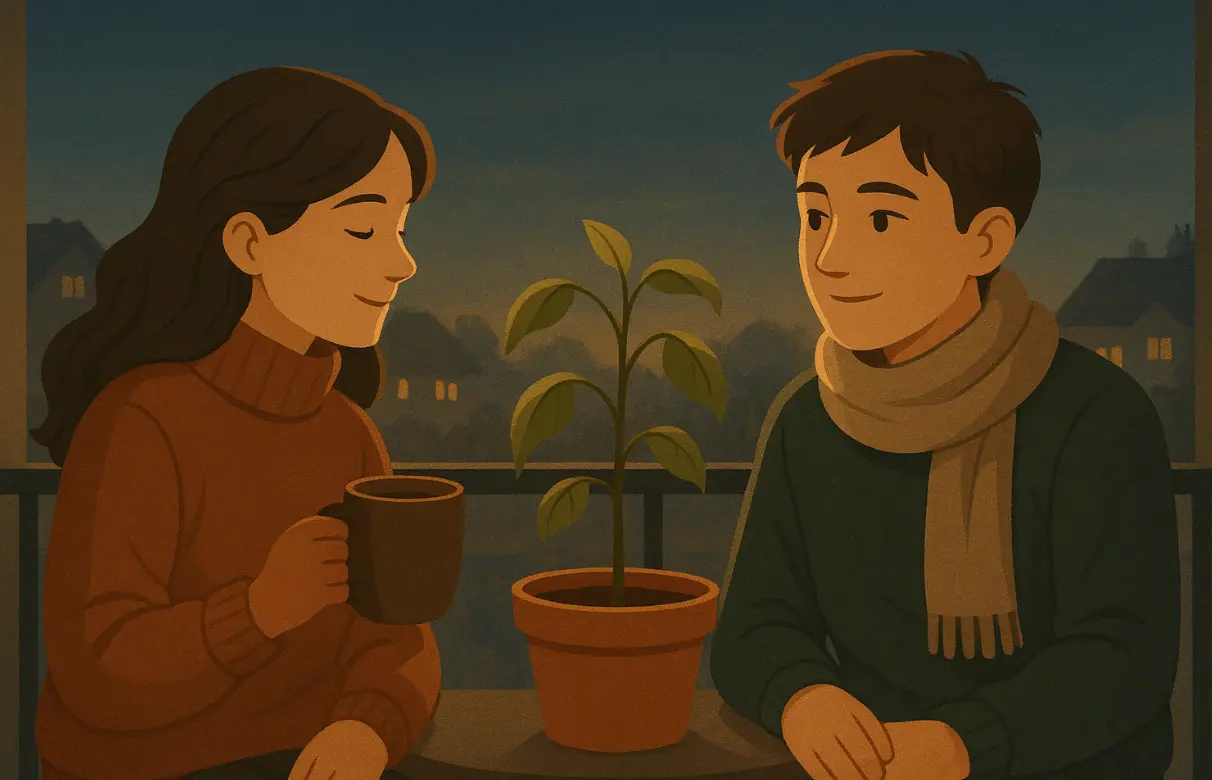
Later that evening, the two sat on the balcony. The winter air carried the faint scent of wet soil. A small potted plant sat between them — its leaves slightly droopy, yet stubbornly green.
Aman picked up a pair of garden shears and clipped off two brownish leaves.
“Why’d you do that?” Ira asked.
“It’s pruning,” he said simply. “When a plant grows, some leaves stop serving it. They block sunlight, they take nutrients but give nothing back. So we trim them. It hurts the plant a little, but it grows back stronger.”
He placed the cut leaves on the soil. “Helping others is like this, Ira. You don’t lose anything by giving — you make room for new blessings. You prune your savings, but it helps your life bloom again.”
Ira watched quietly as he spoke, his eyes reflecting the plant’s shimmer in the fading light.
“But what if,” she whispered, “the pruning goes too far? What if you give away too much?”
Aman smiled. “Then you learn balance. You don’t cut the roots, just the excess leaves. I’m not emptying my savings, I’m sharing from it. And God has His own ways of refilling what we give.”
Days passed. Zoya’s father recovered. Aman continued with his work, and life went on like it always does — a little messy, a little meaningful.
A week later, Ira came home with a bright grin. “Guess what?” she said. “My client gave me an advance for next month. Out of nowhere!”
Aman chuckled. “Out of nowhere, or from somewhere higher?”
She laughed, but her eyes softened. “You think this happened because of what you gave?”
“I don’t think,” he replied gently. “I believe.”
That night, Ira sat by the same plant. The cut leaves were gone, and new green shoots had appeared. She touched the soft sprout and smiled, remembering Aman’s words.
It wasn’t about how much one had — it was about how much one trusted that goodness returns. She realized then that giving wasn’t a transaction; it was a form of faith.
A few weeks later, when her colleague faced an emergency, Ira didn’t think twice. She offered help — not because she was rich, but because she had learned that holding too tightly to what you have leaves no room for growth.
When Aman found out, he didn’t say much. Just looked at her with a proud, knowing smile.
“You pruned your pot too,” he said teasingly.
She nodded. “And guess what? It feels lighter.”
They both laughed, the sound blending with the night air, carrying warmth into the quiet spaces of their home.
Moral
We often treat money like a fragile glass jar — afraid that if we open it, everything inside will shatter. But true wealth isn’t in what we keep; it’s in what we share.
Aman’s belief mirrors a quiet truth: generosity doesn’t shrink what we have — it stretches it in unseen ways. Just as pruning helps a plant grow stronger, giving helps our lives grow richer.
Ira learned that saving is wise, but saving without sharing is like watering a plant and never letting it bloom. A portion of what we own must circulate — through kindness, through empathy, through small acts of giving.
When we help others despite our limited means, we open invisible doors for abundance. Life has its way of rewarding a giving heart — not always in money, but in peace, opportunities, and the quiet joy of knowing you made a difference.
← When Love Tiptoes Out But The Heart Still Waits – A Tale of Slow Goodbyes












Leave a Reply