
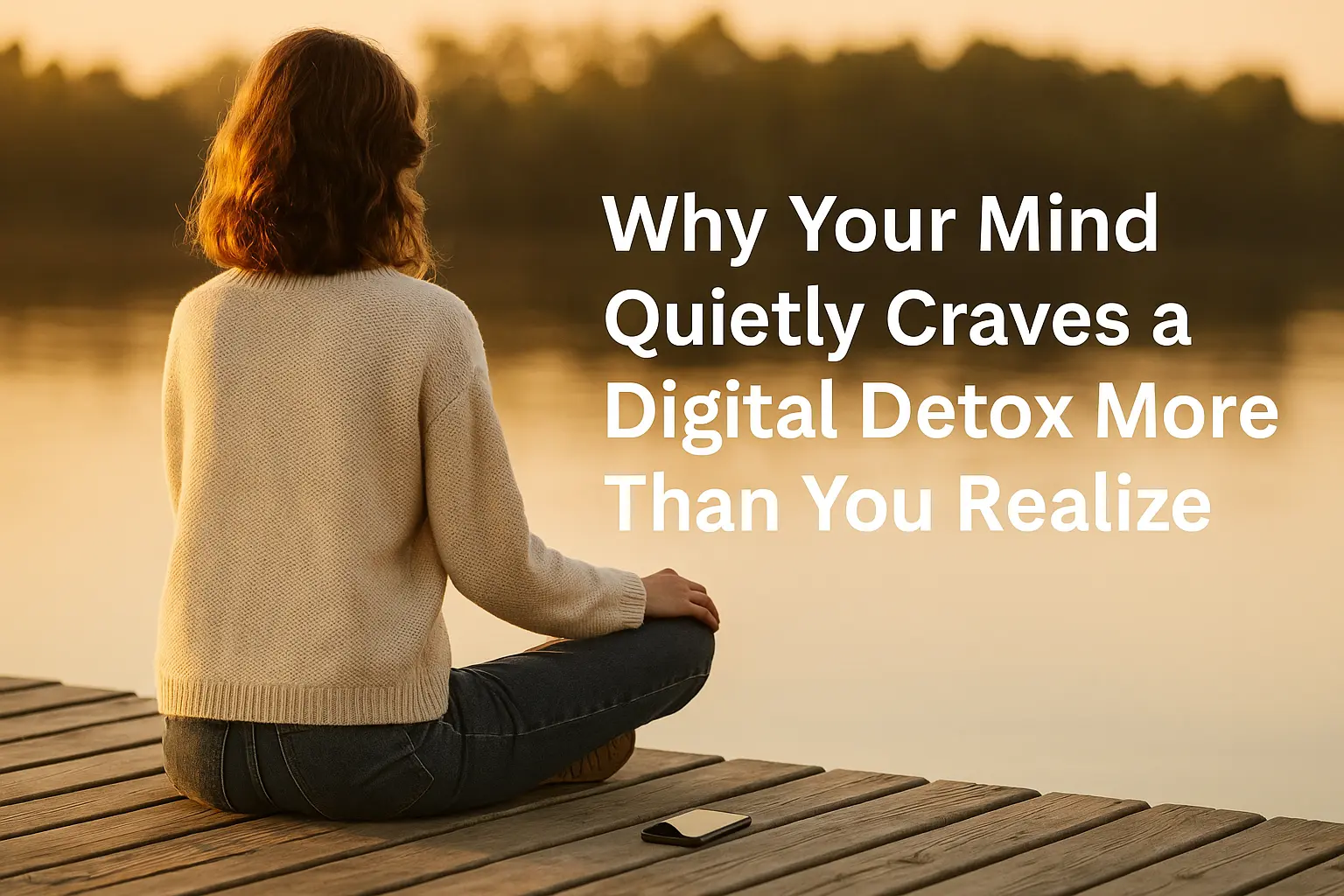
Why Your Mind Quietly Craves a Digital Detox More Than You Realize. We live in a world where screens follow us everywhere. They glow on our desks, blink in our pockets, whisper notifications in the middle of conversations and tug at our attention even before we fully wake up. It feels normal because everyone is doing it, yet deep inside, the mind quietly struggles under the constant noise. A digital detox isn’t about rejecting technology or disappearing from the world. It is about giving the brain a break from the nonstop flow of information it was never designed to handle. And once you step back, even for a little while, you understand how much your mind has been asking for this pause.
Every swipe, every alert, every scroll demands a tiny bit of mental energy. One moment you’re relaxed, and the next moment a notification pulls you into a new emotional zone—an urgent work message, a dramatic headline, a social post that sparks comparison. These micro-shifts exhaust the brain in ways we don’t immediately recognize. Over time, they create mental clutter, making it harder to think clearly, stay focused, or even enjoy stillness. A digital detox lifts that invisible weight. It slows the brain down enough for peace to settle back in.
The real trouble with constant screen use is the way it interrupts natural rhythms. The brain needs pockets of boredom to reset, pockets of silence to process emotions, and pockets of stillness to generate new ideas. When screens fill every empty moment, those pockets disappear. You stop noticing your thoughts. You stop listening to yourself. You lose the simple joy of being present. A digital detox gently brings these lost pieces back to you. You begin to feel your own mind again, without digital noise drowning it out.
There is also something deeply healing about reclaiming your attention. Our attention has become fragmented, scattered across apps and updates. Even when we aren’t online, our minds linger there, replaying what we saw, wondering what we missed, anticipating the next scroll. It’s as if the brain is always half-living in a virtual world. A digital detox re-teaches the mind how to focus. When you reduce screen time, the inner chatter softens. Your thoughts form more clearly. Tasks feel less overwhelming. You remember what it feels like to be truly present in one thing at a time.
The emotional impact is just as significant. Screens constantly expose us to external opinions, people’s highlight reels, stressful news cycles, and unrealistic comparisons. Even the strongest minds absorb these things unconsciously. A digital detox creates emotional space. You stop absorbing everyone else’s energy and start feeling your own. You realize some of your insecurities were not your own thoughts at all—they were borrowed from the online world. The mind feels lighter because it finally breathes without interference.
Sleep also improves naturally when digital activity reduces. Blue light, late-night scrolling, and mental overstimulation disrupt the body’s internal clock. Many people lie awake not because they are restless, but because their minds were overstimulated right before bed. A digital detox resets this cycle. Once you create distance from screens at night, your body remembers how to wind down. Sleep becomes deeper. You wake up with more clarity. And when sleep becomes healthy, mood stabilizes and resilience increases.
A digital detox doesn’t have to be extreme. You don’t have to disappear from technology or throw your phone away. Small, intentional breaks can shift your emotional landscape significantly. Something as simple as keeping the phone in another room during breakfast creates a fresh morning rhythm. Turning off notifications for a day dissolves unnecessary stress. Spending a few hours offline on weekends reconnects you to real life in a gentle, mindful way. The purpose isn’t to restrict yourself but to create a kinder relationship with your digital world.
One beautiful thing happens when digital noise fades: the world feels softer again. You notice sunlight differently. You listen more deeply. Conversations feel richer. Food tastes better when you’re not half-scrolling while eating. Nature feels more alive. The mind slows down, but in the best way—thoughtful, calm, and centered. You realize how many moments you were missing because your attention was always tugged elsewhere.
Creativity also returns quietly. When the brain is no longer overstimulated, it begins connecting ideas in new ways. Solutions come easier. Inspiration appears out of nowhere. Your mind starts exploring again instead of reacting. Many people don’t realize that their creativity isn’t blocked—it’s just buried under too many screens. A digital detox pulls it back to the surface.
What makes digital detox so transformative is not the action itself but what it reveals. It tells you how drained you actually were. It shows you that your mind has a natural rhythm that technology often interrupts. It reminds you that rest can be simple. It teaches you to prioritize peace as much as productivity. And once you see the difference, you naturally begin setting gentle boundaries with technology—not as a rule, but as a way to protect your mental space.
In the end, a digital detox is a quiet homecoming. It brings you back to yourself. It reconnects you with the real world, the one that exists beyond screens, the one that moves at a slower, kinder pace. Your mind feels clearer, your emotions feel steadier, and your days feel more grounded. Technology will always be part of modern life, but you don’t have to let it swallow your presence. A digital detox gives you balance. It reminds you that you can control the noise, not the other way around.
Give your mind this pause. Even a day, even a few hours. Let your thoughts breathe. Let the silence settle. Your inner world will thank you in ways you didn’t even realize you needed.












Leave a Reply