
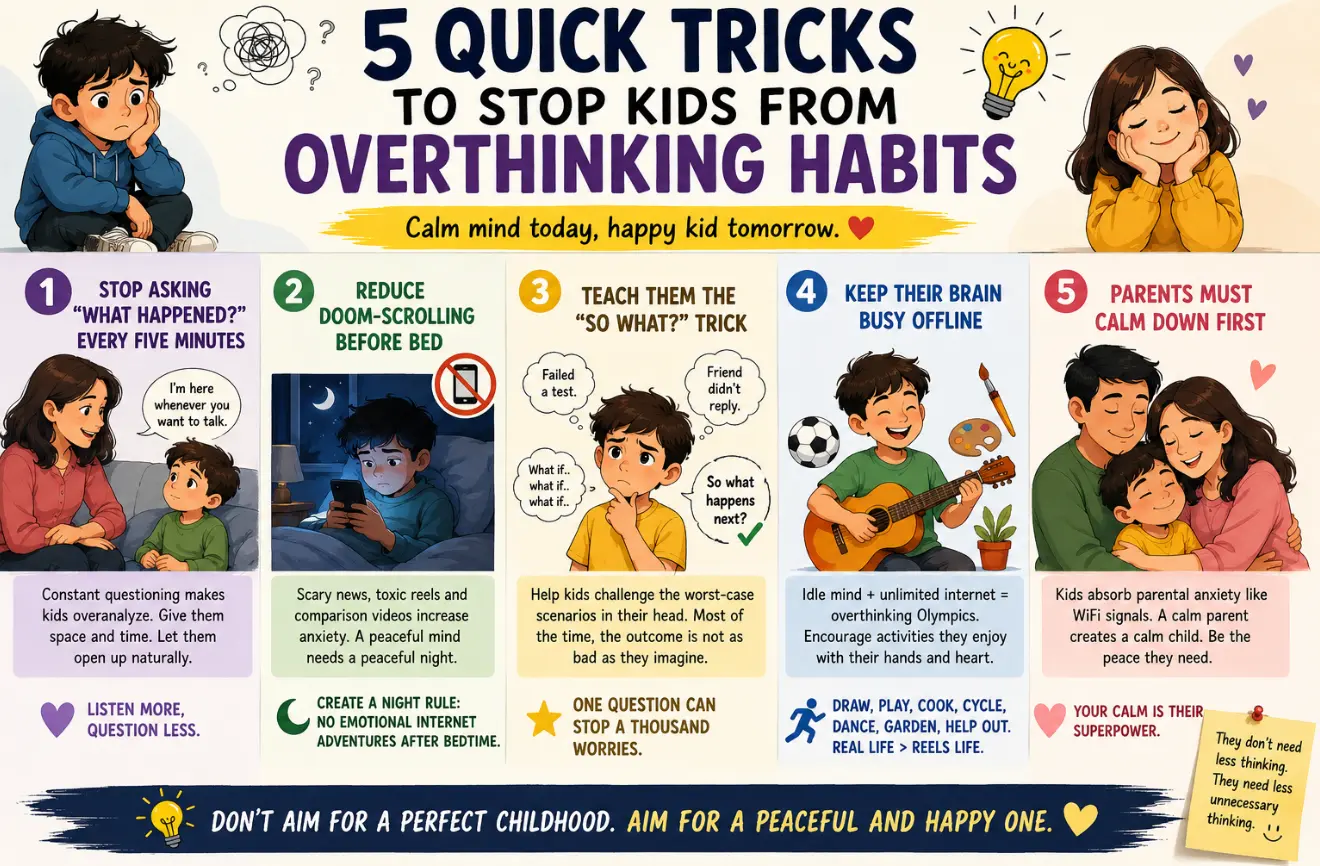
5 Quick Tricks to Stop Kids from Becoming Tiny Overthinking Machines
Children today are thinking too much, worrying too early, and stressing over things that should honestly wait until adulthood. A small mistake in homework feels like a life disaster. One ignored text becomes emotional heartbreak. One exam result suddenly turns into a full movie climax inside their head.
Overthinking in kids is quietly growing everywhere. The good part is — parents can actually help without turning the house into a motivational seminar hall.
1. Stop Asking “What Happened?” Every Five Minutes
Sometimes kids don’t even know why they feel upset. Constant questioning makes them overanalyze every emotion like detectives solving a crime case. Instead of interrogating them, sit casually, talk normally, and let them open up naturally.
Children speak more when they don’t feel cornered.
2. Reduce Doom-Scrolling Before Bed
A child watching scary news, toxic reels, comparison videos, or exam panic content at midnight is basically feeding anxiety directly into the brain. The mind keeps replaying everything while trying to sleep.
Create a simple night rule:
No emotional internet adventures after bedtime.
Even adults cannot survive that peacefully.
3. Teach Them the “So What?” Trick
Kids often imagine the worst outcome possible.
Failed one test?
Forgot one answer?
Friend didn’t reply?
Teach them to ask:
“Okay… so what happens next?”
Usually, the answer is:
Nothing dramatic.
This tiny habit trains the brain to stop turning small issues into blockbuster tragedies.
4. Keep Their Brain Busy Offline
An idle mind plus unlimited internet equals overthinking Olympics.
Encourage activities where hands and mind work together:
drawing, cycling, cooking, gardening, cricket, puzzles, dancing, even helping in small household work.
Children overthink less when life feels real instead of fully digital.
5. Parents Must Calm Down First
This is the hardest truth.
Children absorb parental anxiety like WiFi signals. If parents panic over marks, relatives, money, neighbors, future, and society 24/7, the child silently learns that worrying is normal adult behavior.
A calm parent creates a calm child.
Not perfect.
Just emotionally safer.
At the end of the day, children don’t need a pressure-filled childhood where every small issue feels like a national emergency. They need reassurance, laughter, silly moments, and the freedom to make mistakes without feeling like the world is ending.
Sometimes one warm conversation heals more than ten lectures.
← 7 Signs of Emotional Manipulation People Ignore Until They Feel Emotionally Exhausted












Leave a Reply