
When Parenting Goes Wrong: How Overindulgence Becomes The Root of Chaos. Aditi grew up in a home where her every wish was a command. Her parents doted on her, but not in a healthy way. If she cried, they bent rules. If she demanded, they fulfilled it—whether right or wrong. They never said no. They never taught her boundaries. Slowly, she grew up believing the world must revolve around her whims.
When Aditi’s marriage was arranged with Raghav, a young man from a respectful, middle-class family, everyone thought it was a perfect match. Raghav’s family welcomed her with open arms, giving her the respect of a daughter. But Aditi’s parents never let her truly adjust. They called her daily, reminding her, “Don’t compromise too much. If you don’t like something, speak up. You deserve more. Don’t let them control you.”
At first, Aditi’s small complaints were brushed aside by Raghav’s family. But the constant fueling from her parents turned her into a storm. A festival gift wasn’t grand enough? She fought. Her in-laws didn’t match her expectations? She sulked. Raghav couldn’t fulfill a demand immediately? She called her parents, who scolded Raghav instead of guiding their daughter.
Raghav’s family tried. They adjusted, forgave, and hoped she would grow with time. But her parents’ constant interference became poison. Each argument between husband and wife had invisible third voices—her parents—pulling the strings from behind.
Soon, cracks turned into wounds. Raghav grew tired. His parents, once cheerful, now walked on eggshells. A home once filled with laughter became heavy with tension. Yet, the most painful part wasn’t what Aditi’s parents saw or what Raghav endured—it was what their little daughter, Meera, felt.
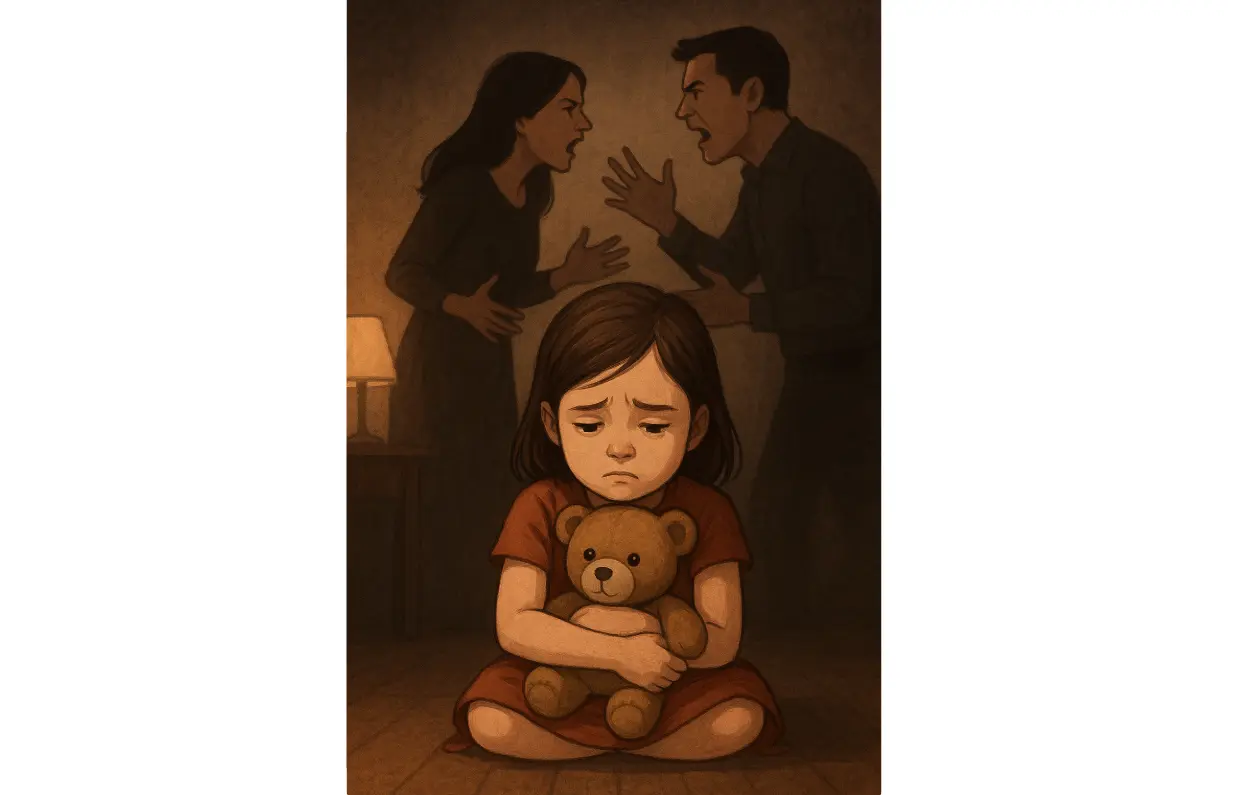
Children don’t need words to understand. Meera, barely four, sensed her father’s silence and her mother’s anger. She saw slammed doors and heard hushed fights at night. The little girl would hug her teddy and whisper, “Papa, don’t cry.” She began to believe love meant shouting, marriage meant war, and home meant fear.
One day, when a heated fight broke out over finances—again pushed by Aditi’s parents’ demands—Meera burst into tears, screaming, “Stop fighting!” That was the moment Raghav realized—the ones truly suffering weren’t him or his parents. It was their child. A tender soul who deserved warmth, not chaos.
But Aditi’s parents still didn’t see. They believed their daughter was a victim, never realizing they were the architects of this mess. In trying to “protect” her, they crippled her ability to handle life’s realities. They gave her entitlement, not strength. They gave her ego, not patience. And their misguided parenting, instead of saving her, ended up destroying the happiness of two families and breaking the innocence of a child.
Reflection: When Parenting Goes Wrong
The tragedy of such stories is that the damage doesn’t end with one generation. The little Meeras grow up carrying scars, either fearing relationships or repeating the same patterns they once hated. All because parents, in their blind love, never taught their children balance, humility, and responsibility.
Overindulgence isn’t care. Over-interference isn’t protection. Sometimes, the best love a parent can give is teaching their child how to bend, how to adjust, how to respect, and how to live without turning selfishness into a habit.
← The Lantern in the Fog: God’s Gentle Light Guiding the True Path











Leave a Reply