
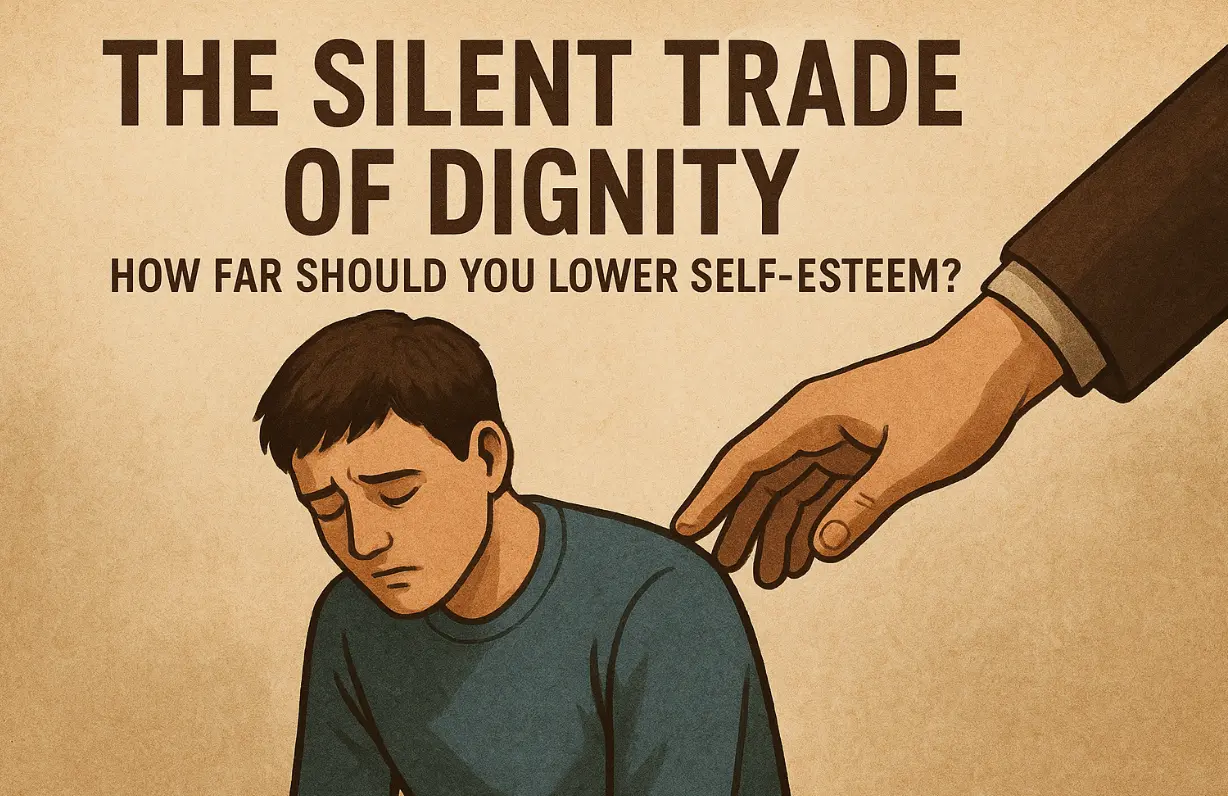
The Silent Trade of Dignity: How Far Should You Lower Self-Esteem? The Fragile Balance of Self-Esteem and Relationships. Every person, no matter where they come from or what they do, carries within them a sense of self-respect. It is not something that only the educated or privileged own. A farmer working in the fields, a businessman running an empire, a child learning to walk, or an elder passing on wisdom—all hold their self-esteem close to their being. It is the invisible crown we all wear, the quiet dignity that tells us, “I matter.”
But life is never so simple. There are times when this crown feels heavy, when circumstances force us to bow our heads, to tolerate insults, or to endure humiliation for the sake of something bigger—family, love, survival. And the question arises: How far should one go in lowering their self-esteem for others? Where does patience end and self-respect begin?
The Thin Line Between Love and Loss of Self
In relationships, self-esteem often becomes the currency we trade to keep bonds alive. A parent may sacrifice their pride for their child’s future. A spouse may endure silence, criticism, or unfair treatment to hold the family together. A friend may forgive endlessly, even when wronged, because the bond is too precious to let go.
At first glance, this seems noble. To bend for love, to sacrifice ego for family—it feels like strength. But if bending turns into breaking, if sacrifice turns into self-erasure, then it is no longer love. It is submission. The heart may justify it in the name of care, but the soul feels the wound of lowered dignity.
The Weight of Humiliation
Humiliation is a poison that seeps slowly. Once, twice, thrice—we tolerate. We tell ourselves, “It’s okay, for them I can endure.” But the more we accept it, the more it chips away at the foundation of who we are. Respect is not just something given by others—it is something we give ourselves daily.
To silently endure small hurts is human, even wise at times. But when humiliation becomes a routine, it kills the spirit. One may hold on to relationships, but at the cost of holding a broken self. What is the worth of love if it demands the burial of one’s dignity?
The Fairness Question
So, is it fair to lower one’s self-esteem for others? The answer is layered. Yes, sometimes we must bend. Relationships cannot survive on rigid pride alone. A family needs forgiveness. Love needs humility. A society needs patience. But fairness ends when the lowering of self-esteem becomes endless, when the act of compromise silences the voice of self-respect.
It is not fair to give up your dignity for others who do not value it. It is not fair to let yourself become smaller so that someone else can feel taller. It is not fair to let humiliation replace harmony.
The Balance We Must Seek
The truth lies in balance. To bend but not to break. To forgive but not to forget who we are. To love but not at the cost of losing the love we owe ourselves. Self-esteem is not arrogance; it is the foundation of a healthy soul. Lowering it occasionally for peace is wisdom. Lowering it permanently is self-destruction.
Each of us must ask: At what point does patience turn into weakness? At what point does compromise turn into self-betrayal? Only then can we draw the line where dignity must stand firm.
Final Reflection
Self-esteem is like the roots of a tree. The tree may sway with the wind, bend with the storm, and even shed its leaves. But if the roots are torn, the tree cannot stand. In the same way, we can bend in relationships, we can compromise, we can endure. But the moment we lose our roots of self-respect, we lose ourselves.
So let your relationships be nurtured by love and humility, but let them never demand the sacrifice of your soul’s dignity. For in the end, a life lived without self-respect is not truly lived at all.
← Out of Range – When Life’s Strongest Connections Fade Away












Leave a Reply