
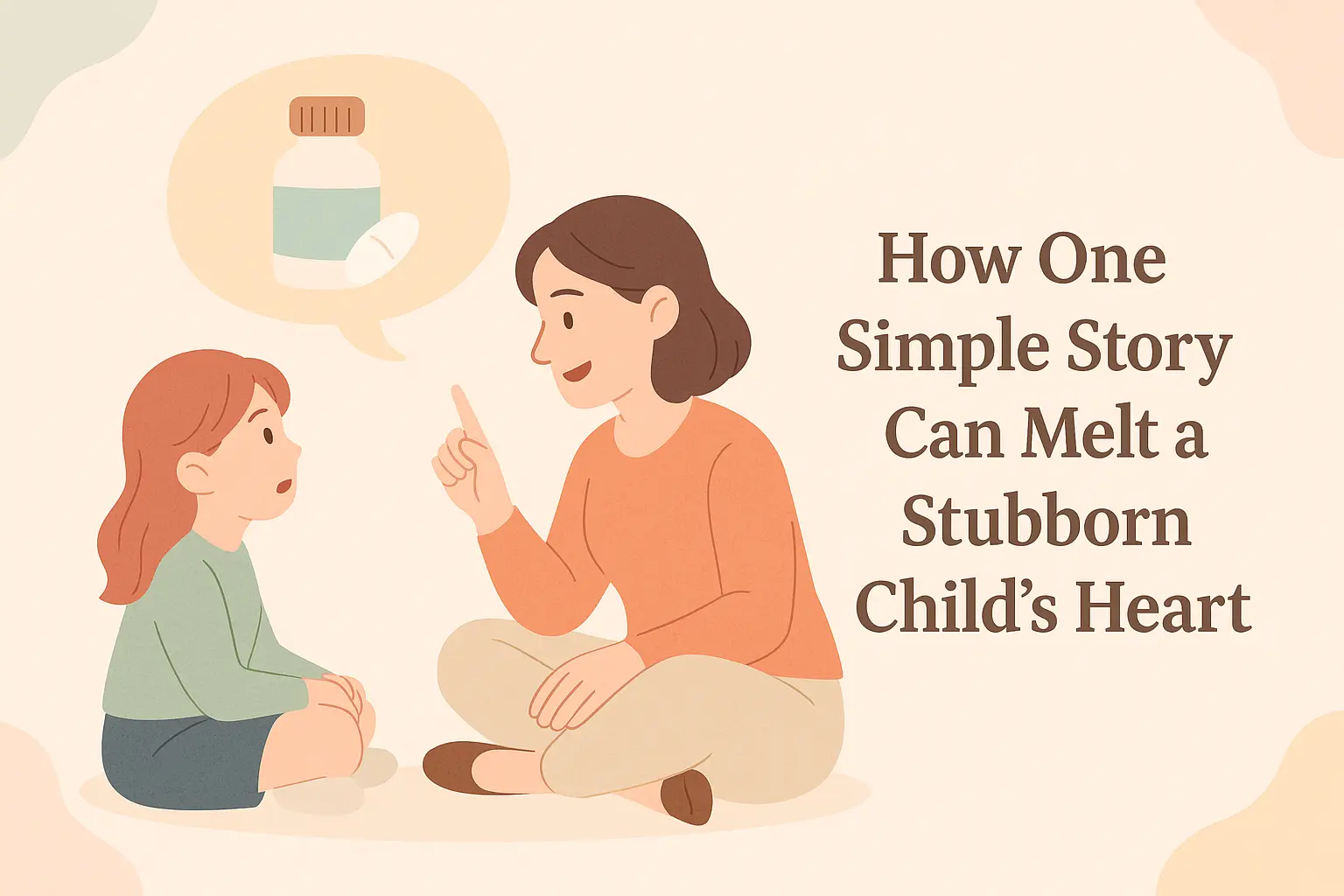
The Trick That Makes Any Child Listen: Psychology’s Softest Superpower. When a Child Finally Listens: The Softest Trick That Breaks the Hardest Walls.
A quiet evening had been unfolding in a home where a thirteen-year-old girl had begun drifting away from gentle instructions and family expectations. Her mother had been trying every possible way to make her understand right and wrong, yet nothing seemed to work. Scolding had failed, explanations had been ignored, and emotional conversations had been brushed away with teenage indifference. A familiar distance had begun to grow — the kind that silently worries every parent.
During one such moment, the girl’s aunt had been observing from afar. It had been clear that the child wasn’t misbehaving out of rebellion; she wasn’t connecting with the language of adults anymore. A small spark of an idea had formed, and a softer approach had been chosen.
Instead of repeating what had already been said, the aunt had sat beside her niece casually. No lectures, no authority, no big words. A story had been used instead.
A simple one.
A relatable one.
She told her niece that once a medicine had been taken by her, and it had caused terrible side effects — discomfort, sickness, and weakness. After going through that misery, she said that she would never tell someone else to take that same medicine. It wouldn’t feel right to make anyone else suffer because she had suffered.
The girl had listened — really listened — because the example made sense to her world. Her aunt then asked her if she would offer the same harmful medicine to someone she loved. The girl immediately said no, realizing how unfair and hurtful that would be.
Then the comparison had been gently slipped into her mind: choosing something that hurts the family is like giving them the same harmful medicine. Why would anyone knowingly let the people they love suffer?
The girl had gone quiet, not out of fear, but out of clarity. Something had clicked. The message had reached her mind without noise and touched her heart without pressure. In that moment, her understanding had been awakened. A simple story had done what multiple lectures could not.
The distance between the child and the family had softened. A little door of understanding had been opened. And the magic had come from nothing but gentle psychology.
When Lectures Fail, This One Story Always Works
This experience shows a truth that often gets overlooked in parenting: a child’s mind does not respond to intensity; it responds to simplicity. Communication becomes effective only when it is delivered in a language the child can emotionally absorb.
In many homes, children grow distant not because they lack values, but because they cannot process information wrapped in adult frustration. Their minds operate in pictures, feelings, and easy-to-understand examples. When parents speak in heavy tones, complicated reasoning, or emotional pressure, the child’s mind switches off automatically.
The medicine analogy works beautifully because it appeals to three psychological triggers that children understand naturally:
1. Visual Thinking
Children think in images. When a story about medicine and side effects was introduced, the child could imagine it. Visualization helps the message settle deeper than any verbal instruction.
2. Emotional Safety
The explanation was given without anger or authority. The child did not feel attacked or judged, which allowed her reasoning ability to stay active. Psychological safety is the foundation of receptive learning.
3. Moral Reasoning Through Empathy
Instead of saying “You are hurting your family,” the story made the child imagine how it feels to hurt someone unintentionally. Empathy is internalized faster through scenarios rather than statements.
Parents often underestimate how powerful a calm tone can be. When adults stop acting like instructors and start acting like storytellers, a child’s emotional doors open. A message spoken harshly is resisted. A message wrapped in a story is absorbed.
This method is not manipulation; it is meaningful communication. It respects the child’s emotional world instead of overpowering it. Parenting becomes easier the moment psychological resistance is removed. The child starts seeing consequences, not commands. The family dynamic becomes cooperative instead of combative.
The most effective parenting tool is not fear, logic, or authority — it is connection. And connection is built not by force, but by thoughtful simplicity. A gentle story, a relatable example, or a soft analogy often becomes the bridge between misunderstanding and understanding.
This is the one-stop parenting trick that survives every age, every personality, every situation:
Speak in a language the child’s heart can hear.
← Why Children Prefer Screens Over Parents: A Soft Story Every Home Should Read












Leave a Reply