
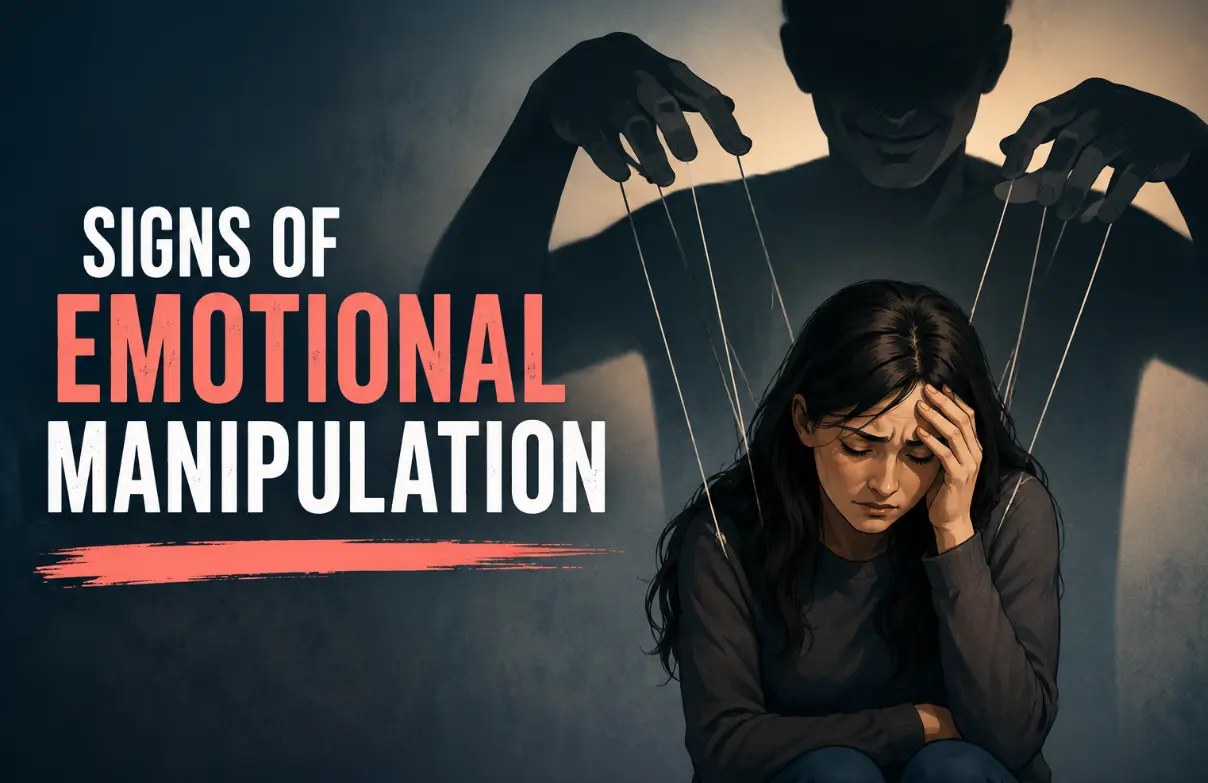
Signs of Emotional Manipulation: 10 Red Flags That Someone Is Trying to Control You
Emotional manipulation can be difficult to recognize because it rarely looks dramatic at first. There may be no shouting, no obvious threat and no single moment that makes you think, “Something is seriously wrong here.” Instead, it can happen through small comments, guilt, silent treatment, constant criticism or subtle attempts to make you question your own decisions.
The confusing part is that emotional manipulation often comes from someone you care about. It could be a partner, friend, family member or even a colleague. Because you value the relationship, you may initially make excuses for their behavior or wonder if you are simply being too sensitive.
But if you repeatedly walk away from conversations feeling guilty, confused, anxious or responsible for someone else’s emotions, it may be worth taking a closer look at the pattern.
Here are some common signs of emotional manipulation that should not be ignored.
1. They Make You Feel Guilty for Saying No
One of the most common manipulation tactics is turning your perfectly reasonable “no” into something you should feel bad about.
For example, you decline an invitation because you are tired, and the person responds with, “Fine, I guess I know how important I am to you.”
Instead of respecting your decision, they make you feel selfish for having a boundary.
Guilt-tripping works precisely because it targets relationships we care about. According to Cleveland Clinic, guilt-tripping involves using someone’s sense of responsibility or obligation to influence them into doing something they don’t actually want to do.
A healthy relationship allows you to say no without being punished emotionally.
2. They Constantly Make You Question Yourself
Do you find yourself thinking, “Maybe I really am overreacting?”
That can be an important warning sign.
A manipulative person may repeatedly tell you that you misunderstood something, remembered an incident incorrectly or are making a big deal out of nothing. When this happens over and over again, you may gradually stop trusting your own judgment.
This can become gaslighting, a specific form of emotional manipulation in which someone tries to make you question your perception, memory or ability to make decisions.
The key is the pattern. One disagreement about what happened does not automatically mean someone is gaslighting you.
3. Somehow, Everything Becomes Your Fault
You raise a concern, but somehow the conversation ends with you apologizing.
You tell them that their words hurt you, and they respond by explaining everything you supposedly did wrong.
You point out their behavior, and suddenly you are defending yourself.
This constant shifting of responsibility can leave you feeling as though you are responsible for every problem in the relationship.
Emotional abuse can involve blaming the other person for unhealthy or abusive behavior, while manipulation may also involve guilt, shame and repeated attempts to avoid responsibility.
A healthy disagreement should allow both people to examine their behavior—not turn into a courtroom where one person is always on trial.
4. They Use the Silent Treatment to Punish You
Taking some time to cool down after an argument is not necessarily manipulation. Sometimes people genuinely need space.
The problem begins when silence is deliberately used as punishment.
For example, someone may suddenly stop speaking to you, ignore your messages or withdraw affection until you agree with them or do what they want.
This can make you desperate to restore peace, even if you have done nothing wrong.
Withholding attention or affection is recognized as one of the red flags associated with emotional abuse.
The difference between healthy space and manipulation often comes down to intent and pattern: healthy space communicates a need for time, while punishment is designed to make you give in.
5. They Make You Feel Like You Owe Them
“I’ve done so much for you.”
“After everything I’ve sacrificed?”
“Is this how you repay me?”
These statements can sound like ordinary frustration, but when they are repeatedly used to pressure you into doing what someone wants, they can become emotionally manipulative.
Kindness and support should not automatically become a debt that someone can collect whenever they want something from you.
A person may help you because they genuinely care about you. That does not mean you have surrendered your right to make your own choices.
6. They Use Your Insecurities Against You
Someone who knows your deepest insecurities can either treat them with care or use them as weapons.
A manipulative person may bring up your appearance, past mistakes, fears, failures or personal vulnerabilities whenever they want to win an argument or weaken your confidence.
Over time, this can make you afraid to disagree with them because you already know which emotional buttons they will press.
Gaslighting and emotionally abusive behavior can include shaming, humiliation, belittling and using a person’s vulnerabilities to undermine their confidence.
7. They Try to Isolate You From Other People
Another major red flag is when someone gradually tries to reduce your connection with friends and family.
They may constantly criticize your friends.
They may say your family does not understand you.
They may become jealous whenever you spend time with someone else.
Eventually, you may start avoiding people simply because you don’t want another argument.
Isolation can increase emotional dependence because the person becomes your main source of companionship, approval and support. The National Domestic Violence Hotline lists controlling your time, excessive jealousy and discouraging contact with friends or family among warning signs of emotional abuse.
8. They Turn Themselves Into the Victim Every Time
You try to discuss something that hurt you.
Instead of listening, they become the victim.
Suddenly, you are comforting them.
This can happen occasionally in any relationship because people are imperfect and emotions can get messy. But if it happens almost every time you express a concern, it becomes difficult to resolve anything.
You may eventually stop speaking about your feelings altogether because you know the conversation will somehow turn against you.
9. Their Affection Changes Depending on Whether You Obey
One minute they are extremely loving. The next, they are cold because you disagreed with them.
They may shower you with affection when you do what they want and withdraw it when you don’t.
In some abusive relationships, excessive compliments and gifts can also be used later as leverage or manipulation—a behavior sometimes described as love bombing.
Love should not feel like a reward that can be taken away whenever you make an independent decision.
10. You Don’t Feel Like Yourself Around Them Anymore
Sometimes the strongest warning sign isn’t something the other person says.
It is how you feel after dealing with them.
You may constantly second-guess yourself. You may apologize even when you are not sure what you did wrong. You may feel nervous before talking to them or spend hours replaying conversations in your head.
You might even notice that you have stopped enjoying hobbies, seeing friends or expressing your opinions because you are worried about how they will react.
Cleveland Clinic notes that people experiencing gaslighting may become anxious, lose confidence in their judgment, apologize despite not believing they did anything wrong and feel increasingly confused after interactions.
Emotional Manipulation Isn’t Always Obvious
It is important not to label every disagreement, bad mood or insensitive comment as emotional manipulation.
People sometimes communicate badly. They make mistakes. They get defensive. They say things they later regret.
What matters is the repeated pattern.
If someone can listen, take responsibility, apologize sincerely and change their behavior, that is very different from someone who repeatedly uses guilt, fear, shame, blame or confusion to control you.
Emotional manipulation can also exist alongside emotional abuse. The National Domestic Violence Hotline describes emotional abuse as non-physical behavior intended to control, isolate or frighten another person, including manipulation, intimidation, humiliation and dismissiveness. (The Hotline)
What Can You Do If You Recognize These Signs?
Start by trusting the discomfort you are experiencing rather than immediately dismissing it.
You can write down specific incidents, particularly if you frequently find yourself questioning what happened. Keeping a record can help you identify whether there is actually a recurring pattern.
It can also help to talk to someone you trust. An outside perspective can sometimes make things clearer, especially when a relationship has gradually affected your confidence.
Most importantly, remember that setting a boundary is not the same as hurting someone.
You are allowed to say no.
You are allowed to have friends.
You are allowed to have private time.
You are allowed to disagree.
And you are allowed to expect respect in a relationship.
If someone’s behavior makes you feel frightened or unsafe, consider seeking support from a trusted person or a qualified mental health professional and prioritize your safety.
Emotional manipulation can be surprisingly difficult to spot because it often hides behind ordinary emotions—love, guilt, concern, jealousy or even kindness.
That is why the biggest question isn’t simply, “Did this person say something hurtful?”
Ask yourself something deeper: “Do I regularly feel smaller, more confused or less confident after dealing with this person?”
One uncomfortable conversation does not define a relationship. But a repeated pattern of guilt, blame, control, isolation and self-doubt deserves attention.
Healthy relationships don’t require you to constantly abandon your own feelings just to keep someone else happy.
← Dosa Sparks Debate Online: Is Eating It With a Fork and Spoon Really Wrong?











Leave a Reply