
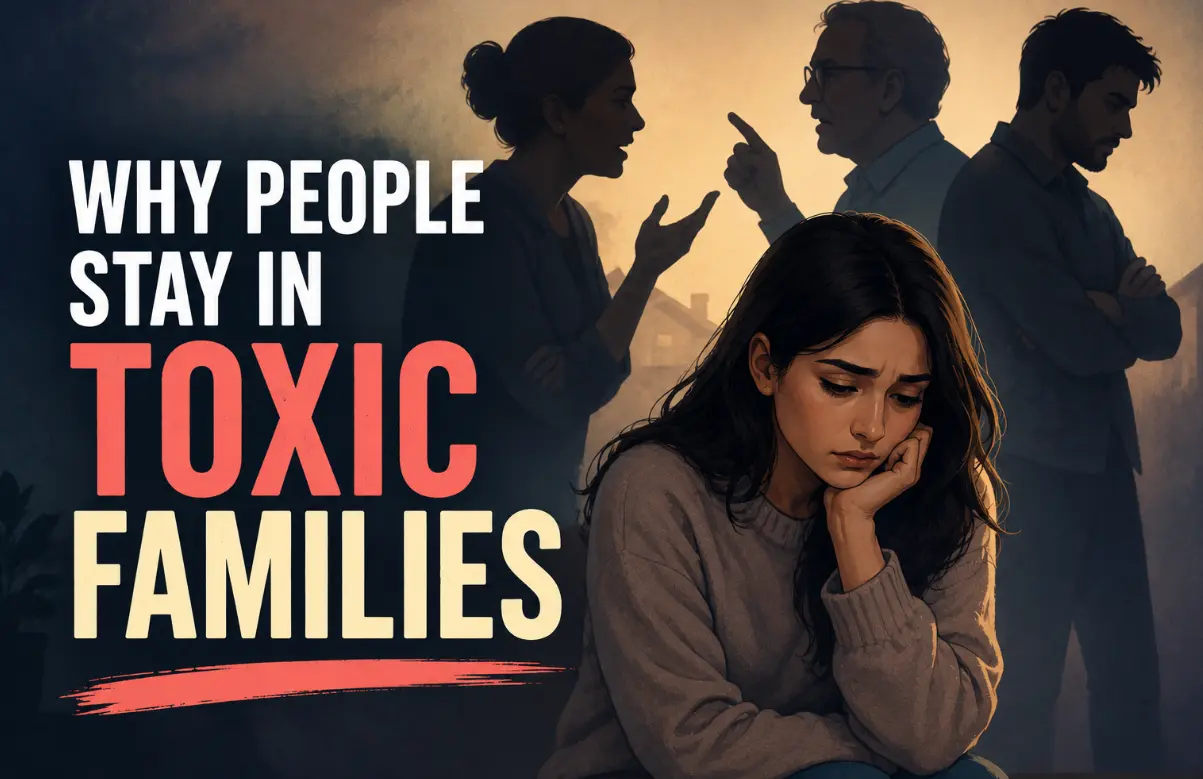
Why People Stay in Toxic Families: 10 Reasons It Can Be So Hard to Walk Away
When people hear the phrase “toxic family,” one of the first things they may wonder is: Why doesn’t the person simply leave?
It sounds simple from the outside.
If a family member constantly criticizes you, controls you, manipulates you, humiliates you or makes you feel emotionally exhausted, why continue living with them or maintaining the relationship?
But family relationships are rarely that simple.
Unlike an unhealthy friendship that you can walk away from, family ties can involve childhood memories, financial dependence, shared homes, cultural expectations, responsibilities and years of emotional attachment. Sometimes the person who is hurting you is also someone you love deeply.
That complicated mix can make leaving—or even creating distance—extremely difficult.
Here are some of the biggest reasons people stay in toxic family situations.
1. They Have Been Taught That Family Comes First
Many people grow up hearing things like, “Family is everything,” “You have to adjust,” or “You should never abandon your own people.”
These messages can become deeply rooted.
As a result, someone may recognize that a family relationship is unhealthy but still feel guilty about distancing themselves.
They may think setting boundaries makes them selfish, disrespectful or ungrateful.
But loving your family does not mean you have to accept every behavior from them.
A relationship can matter to you while still requiring boundaries.
2. The Behavior Feels Normal to Them
This is one of the most difficult things to recognize.
If someone grows up around constant shouting, insults, controlling behavior, emotional blackmail or humiliation, they may not immediately recognize it as unhealthy.
It can simply feel like “the way our family is.”
The National Domestic Violence Hotline notes that people who grow up around abuse may have difficulty recognizing unhealthy behavior because it has been normalized for them.
That doesn’t mean they want to be treated badly.
It means they may have never been shown what a healthier family dynamic looks like.
3. They Still Love the Person
This is something outsiders often struggle to understand.
A person can be hurt by a parent, sibling or other relative and still love them.
They may remember the good years.
They may remember childhood moments, birthdays, family trips or times when that person genuinely helped them.
That emotional history doesn’t disappear simply because the relationship has become unhealthy.
Even in abusive relationships, people can continue to have genuine affection for the person causing them harm. The Hotline specifically lists love and hope for the relationship as reasons people may remain in harmful situations.
Human emotions are rarely as neat as “they hurt me, therefore I don’t love them anymore.”
4. They Keep Hoping Things Will Change
Perhaps this is one of the biggest reasons people stay.
They remember the rare moments when everything feels normal.
A difficult parent suddenly becomes affectionate.
A controlling sibling apologizes.
A family member who has been cruel becomes caring for a few days.
Those good moments can create hope that maybe this time things will finally be different.
The problem is that occasional kindness does not necessarily mean the underlying pattern has changed.
In abusive dynamics, periods of kindness or reconciliation can become part of a repeating cycle that strengthens emotional attachment.
People may therefore stay not because they enjoy the toxic behavior, but because they keep waiting for the loving version of the person to return permanently.
5. They Depend on the Family Financially
Sometimes emotional boundaries are much easier to talk about than practical ones.
What if the person lives in the family home?
What if they don’t have an independent income?
What if they depend on relatives for housing, childcare, transportation or other necessities?
Leaving may simply not be financially realistic at that moment.
Financial dependence and lack of resources are recognized barriers that can make leaving harmful or abusive relationships extremely difficult.
This is why telling someone, “Just move out,” can be incredibly insensitive.
The person may already know they want distance. They may simply need time and resources to make it possible.
6. They Are Afraid of Being Rejected by the Entire Family
Family conflicts rarely involve only two people.
If someone establishes boundaries with one relative, other family members may become involved.
They may hear:
“She’s your mother.”
“He’s still your brother.”
“How can you treat your family like this?”
“Everyone has adjusted. Why can’t you?”
The person may fear becoming the family villain.
They may worry about being excluded from celebrations, losing contact with relatives or being judged by people they have known their entire life.
That fear can keep someone trapped even when they know the relationship is hurting them.
7. They Feel Responsible for Everyone’s Happiness
Some people become the peacekeepers of their families.
They are constantly trying to prevent arguments.
They apologize first.
They calm everyone down.
They make compromises.
They take care of parents or siblings.
Eventually, they may start believing that keeping the family together is their responsibility.
This can become exhausting because one person cannot single-handedly create a healthy family dynamic.
The Hotline notes that people can feel responsible for maintaining the family unit and may be pressured to stay because of that sense of responsibility.
You can love your family without being responsible for everyone’s emotions.
8. They Are Afraid of What Will Happen If They Set Boundaries
Toxic family members do not always respond calmly when someone begins establishing boundaries.
A person who has always had access to you may become angry when you suddenly say no.
They may accuse you of changing.
They may threaten to stop speaking to you.
They may involve other relatives.
They may spread personal information or try to make you feel guilty.
In more serious situations, there can even be threats or intimidation.
This is why creating distance from an abusive family member may require careful planning rather than an impulsive confrontation. Cleveland Clinic notes that estrangement can involve practical complications and that toxic relatives may not always respect newly established boundaries.
9. They Are Attached to the Idea of Having a “Normal Family”
Sometimes people aren’t only holding onto the family they have.
They are holding onto the family they wish they had.
A daughter may keep hoping that one day her mother will understand her.
A son may continue looking for approval from a father who has never given it.
A sibling may keep believing that their relationship will eventually return to how it was when they were children.
That hope can be incredibly powerful.
And grieving the family relationship you wanted can be just as painful as dealing with the relationship you actually have.
10. They Don’t Yet Believe They Deserve Better
Long-term criticism can slowly change the way someone sees themselves.
If a person repeatedly hears that they are selfish, difficult, ungrateful, incapable or too sensitive, they may eventually start believing it.
They may think:
“Maybe I really am the problem.”
“Maybe every family is like this.”
“Maybe I’m asking for too much.”
Emotional abuse can gradually damage confidence and self-worth, making it harder for someone to trust their own feelings and recognize unhealthy behavior.
That is why leaving a toxic family isn’t always simply about finding the courage to walk away.
Sometimes the first step is rebuilding the confidence to believe that you are allowed to want something healthier.
Staying Doesn’t Mean They Are Weak
This is perhaps the most important point.
Someone staying in a toxic family situation is not automatically weak, foolish or responsible for what is happening to them.
There may be financial barriers, emotional attachments, cultural expectations, children, fear, housing concerns or years of conditioning involved.
And sometimes the safest option is not immediate estrangement. It may be gradually creating boundaries, becoming financially independent, seeking outside support or reducing contact when possible.
If emotional or physical abuse is involved, safety should come before confrontation. A person doesn’t have to announce that they are leaving or confront the family member simply to prove that they are strong.
What Can Help?
The first step can simply be recognizing the pattern.
Writing down recurring incidents can help someone see whether the behavior is occasional family conflict or a persistent pattern of control, humiliation, manipulation or intimidation.
Talking to a trusted friend, counselor or mental health professional can also provide an outside perspective.
And boundaries don’t always have to mean cutting someone off completely.
Sometimes a boundary can be as simple as refusing to discuss certain subjects, limiting how often you communicate, ending conversations when someone becomes abusive or protecting your personal information.
For some people, greater distance may eventually become necessary. For others, carefully managed contact may be enough.
There is no single solution that works for every family.
Toxic family relationships can be especially painful because you cannot simply erase years of memories and attachment.
You may love someone and still need distance from them.
You may care about your family and still decide that certain behavior is unacceptable.
You may forgive someone and still refuse to give them unlimited access to you.
And sometimes, staying for a while doesn’t mean you have chosen the toxic situation forever. It may simply mean you are still figuring out how to become independent, protect yourself and decide what kind of relationship you want going forward.
The important thing is not to judge someone for the amount of distance they are currently able to create.
Sometimes leaving begins long before someone physically walks away. It begins when they finally realize that being family does not give anyone the right to repeatedly hurt them.
← Signs of Emotional Manipulation: 10 Red Flags That Someone Is Trying to Control You










Leave a Reply